



Why your AC smells like burning in Kansas

Describe what your air conditioner is doing once, in one form.

Skip the search

Why does my AC smell like something is burning?

A burning smell from the vents is one of those things you notice right away, usually when the AC kicks on after sitting idle for a while. With a house full of people depending on you to keep things comfortable through a Kansas summer, a smell like that is hard to ignore and harder to wait out. You want to know if it's something you can shut off and leave alone, or something that needs a look now.

Usually a motor or electrical part overheating, not the air itself

Most of the time that smell is coming from the blower motor, a capacitor, or a wire connection that's gotten hot, not from anything burning in the ductwork. Dust that's settled on the motor or in the cabinet can also scorch and give off that same sharp smell the first time the system runs hard after sitting unused. With summers here pushing the AC to run for hours at a stretch, a part that's starting to fail gets stressed fast, and the smell is often the first sign of it. If the smell sticks around past a few minutes, or you notice it every time the system cycles, that part needs to be checked before it fails outright or trips the breaker.

An outdoor air conditioning condenser unit on a concrete pad at the corner of a house, next to vinyl siding and a plain light-colored wall, with grass and a mulch bed in the foreground.

What a hot smell usually means

A burning or hot dust smell often comes from the blower motor bearings wearing down, or from a blocked filter forcing the motor to work harder than it should. The motor runs hotter than normal and that heat carries through the ducts into the rooms you're sitting in. A wire that's come loose at the furnace board can do the same thing, since a loose connection heats up every time the system cycles.

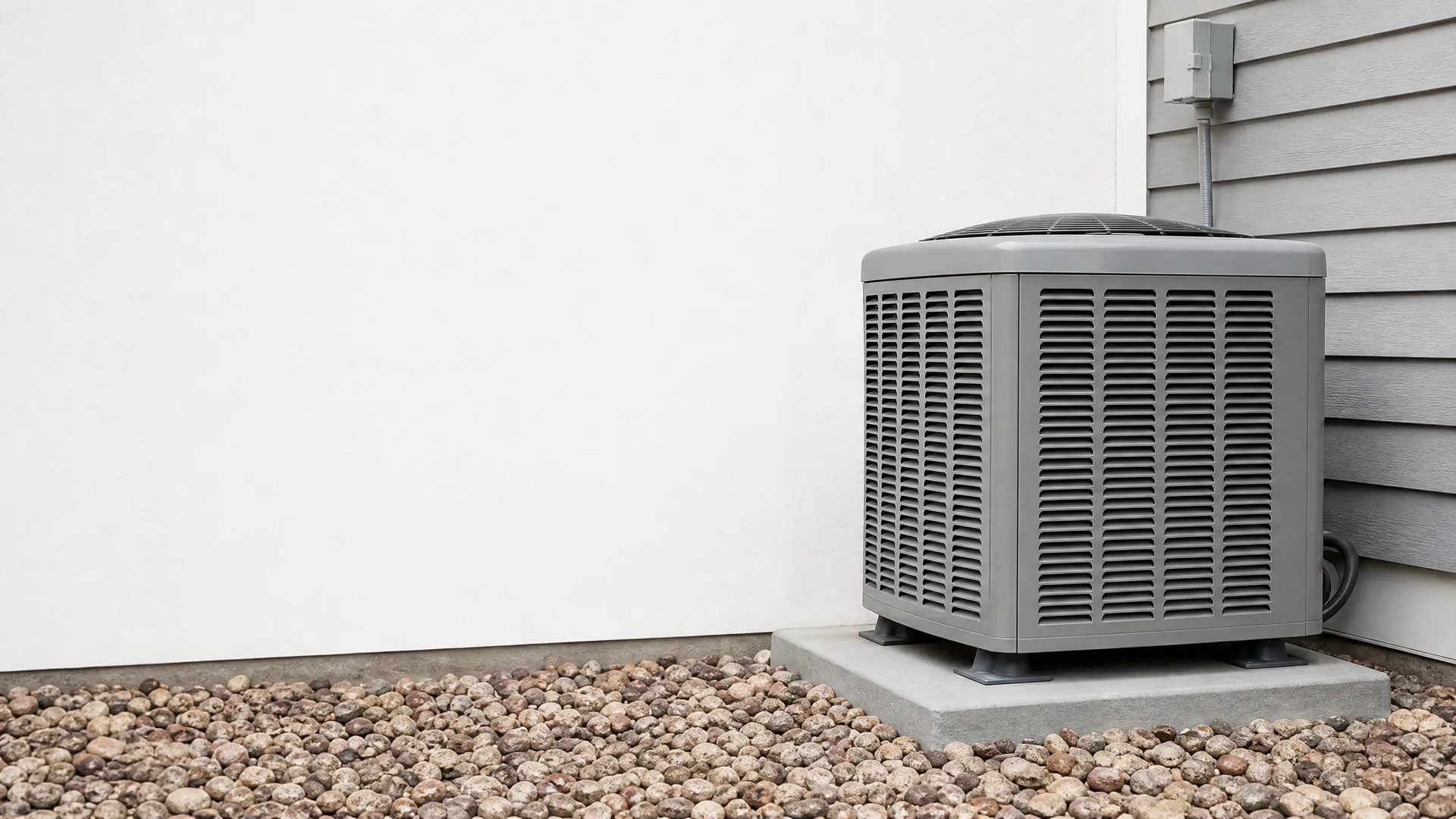
A gray outdoor air conditioning condenser unit sits on a concrete pad beside a white stucco wall and gray horizontal siding, surrounded by rounded landscaping gravel, with an electrical disconnect box mounted on the siding above.

A sharper, acrid smell is different

If what you're smelling is sharper, almost like plastic or electrical, that points to something failing inside the unit itself rather than dust burning off. A capacitor going bad, insulation breaking down around a wire, or a motor winding starting to fail can all put off that odor. Kansas summers push the outdoor unit hard for months at a time, and that steady running wears on electrical parts faster than a system that cycles on and off lightly.

A closed dark laptop and a ceramic mug of coffee on a wooden dining table, with wooden chairs, a dark kitchen cabinet with cutting boards and a potted plant, and a leafy plant by a window in the background.

What this means for your house

A motor running hot or straining against a clogged filter doesn't fix itself. Left alone, it keeps working that way every time the AC cycles on, which in a Kansas summer is a lot of cycles. That's wear piling onto wear, and it's how a worn bearing turns into a seized motor, usually on the kind of hot, sticky afternoon when you need the house cool the most.

You don't have to spend your evening on this. No pulling up contractor names, no calling three companies and repeating the same description of the smell each time, no sitting with a stack of quotes trying to guess which one is fair. One licensed contractor working near you gets the details once, and they're someone who sees this exact complaint every summer and knows what a motor that smells like this usually needs. That's one call instead of several, and one visit instead of a week of back and forth while the house sits uncomfortable.

Interior corner with a beige sofa holding a dark green and a light cushion and a textured throw, a potted small-leaved tree beside a white-framed window, and a dark shallow bowl on a wooden coffee table in the foreground.
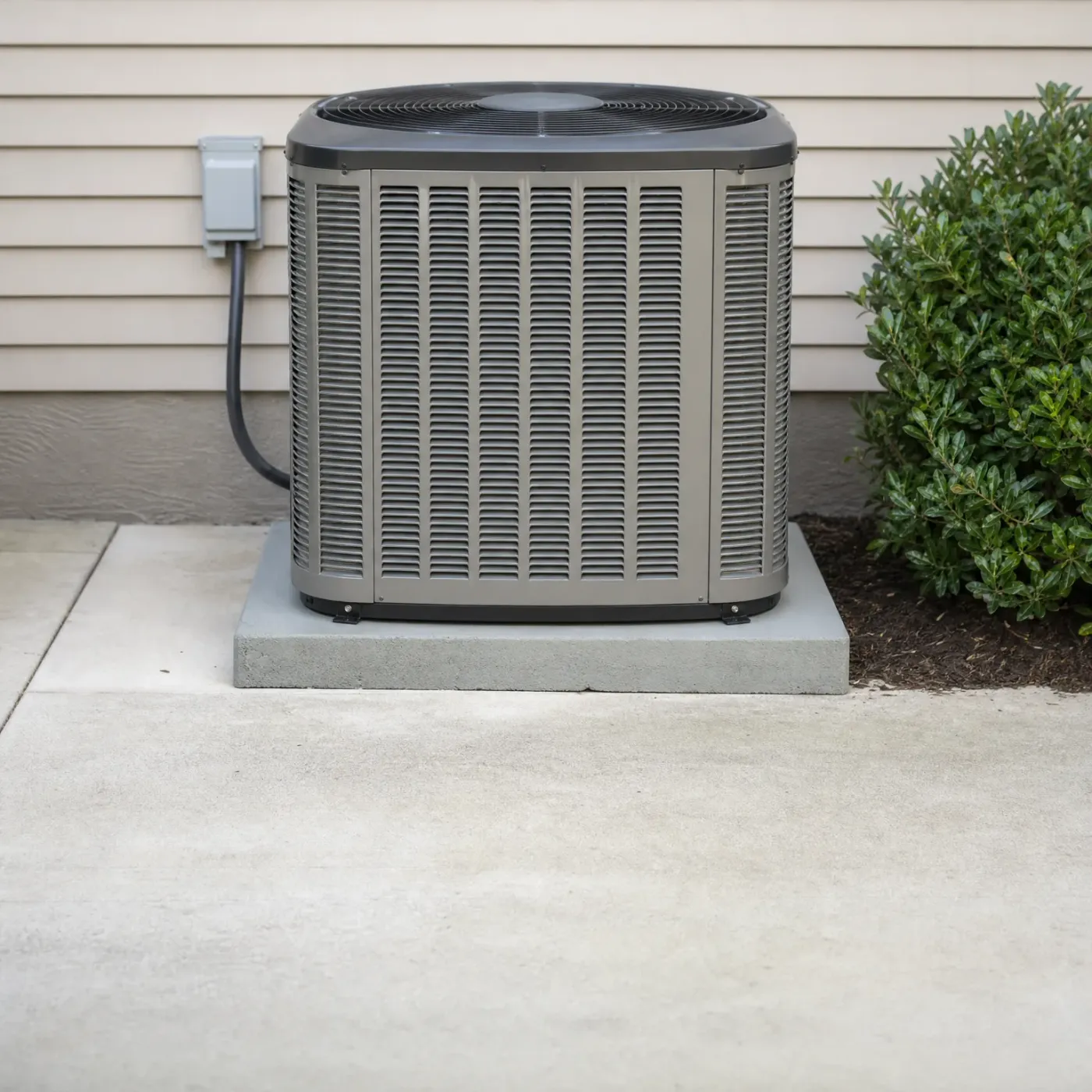
An outdoor air conditioning condenser unit on a concrete pad beside a house with horizontal lap siding, with an electrical disconnect box and conduit on the wall and a green shrub to the right.

Running clean

This is what a unit sounds and smells like when it's not under strain. No odor when it kicks on, just the fan and the compressor doing their job. The louvers are clear, the fan grille spins freely, and air moves through without anything blocking it.
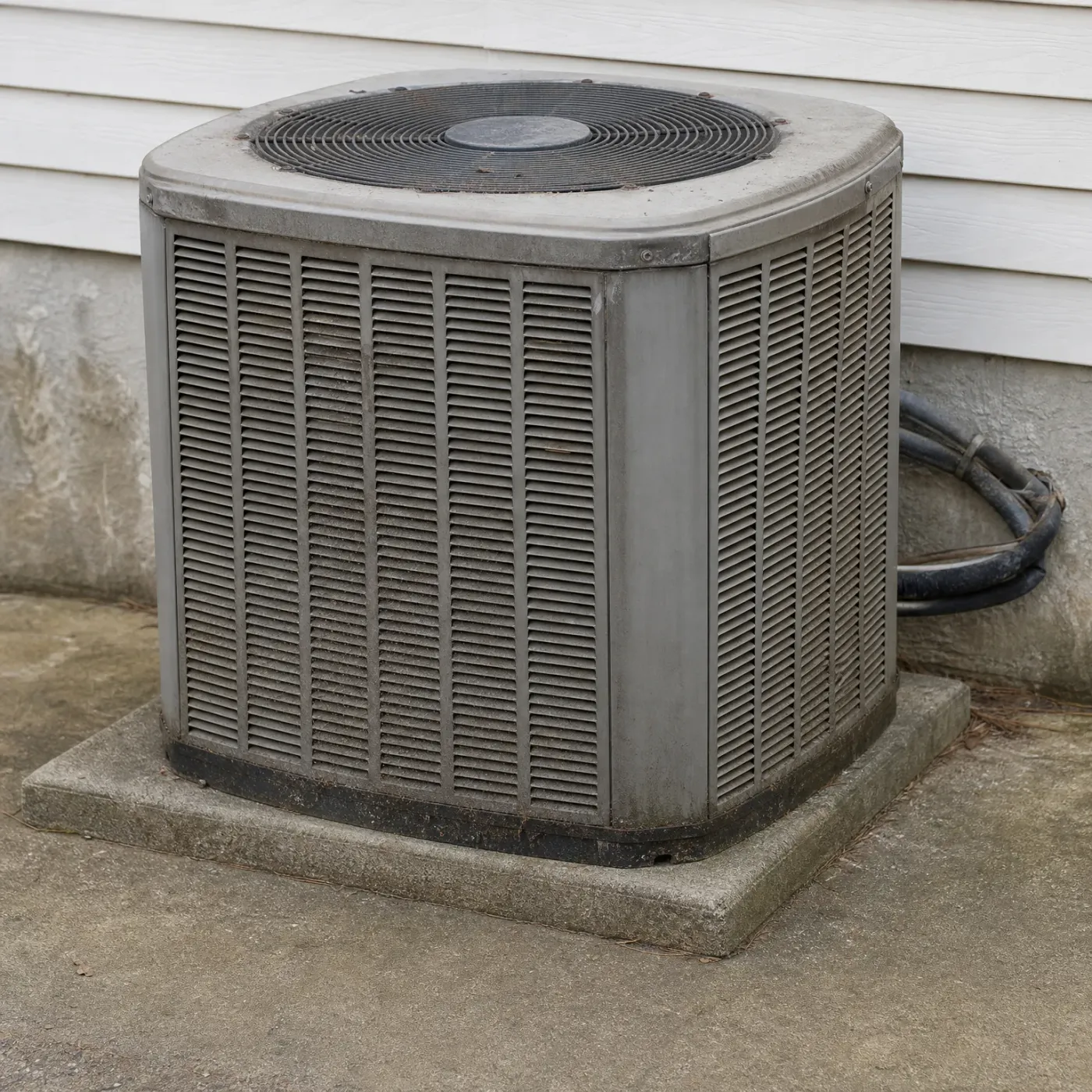

An outdoor air conditioner condenser unit on a concrete pad beside a house with horizontal siding and a lower concrete foundation wall, with coiled refrigerant lines at right.

Working too hard

Dirt caked on the louvered panels and fan grille blocks airflow across the coil, the same way a clogged filter does. The motor and compressor push harder to move air through a dirty unit, and that extra strain is where a burning smell starts.

A woman and a child wrapped together in a knitted gray blanket on a couch, with the child's head resting on her shoulder and a lit table lamp and houseplant in the background.
An older woman with short gray hair in a cream cable-knit turtleneck sweater smiles while looking to the side in a wooden kitchen, with a round loaf of bread on a board in the foreground and a lit candle by a dark window.

No phone calls to make

A burning smell is easy to put off checking when the AC still blows cold. But a strained motor in a Kansas summer doesn't get a break to cool down and reset itself. It runs again a few hours later, hotter than before, and that's how a worn bearing turns into a seized motor. Finding someone to look at it shouldn't be its own chore on top of that. You could spend an afternoon calling around, telling each one what you smell and when it happens, then waiting on quotes to compare. This instead goes to one licensed contractor near you, someone who works on AC units all summer in this heat and has smelled this before walking in the door. You explain it once. No string of callbacks from companies you didn't choose, just the one who's actually going to show up and look at that motor before it quits on the hottest day of the year.

If the smell shows up and fades after a few minutes, the AC is probably still fine to run while you wait for someone to look at it. Keep an eye on it, but it's not usually something that strands you without cooling.

If the smell comes with a tripped breaker, smoke, or a burning plastic odor instead of a dusty one, shut the system off at the thermostat and don't run it again until a contractor's checked it. That's a different problem than a dirty motor working hard.

A woman with long light-brown hair in a gray knit sweater sits in a living room looking off to the side, with a sectional sofa, houseplant, lamp, wooden table and large windows behind her.
A woman in a chunky gray turtleneck sweater sits indoors looking off to the side, with a blurred dining table, chairs, pendant lamp and window behind her.
A woman in a cream knit sweater with her hair in a bun stands near a window, looking off to the side, with a gray sofa, houseplant and open kitchen with pendant lights blurred behind her.
A woman with long brown hair in a cream knit sweater stands near a window, looking to the side, with a white sofa, shelving, and a hallway visible behind her.
A gray outdoor air conditioning condenser unit on a concrete pad beside a house with horizontal lap siding, with a wall-mounted electrical disconnect box and refrigerant lines, shrubs, mulch and lawn around it.

Clean and clear

The condenser outside sits on its pad with the fins open to the air and the ground around it clear. Nothing blocks the sides, the conduit runs straight to the disconnect, and the unit pulls air through without resistance. No smell, no strain.

An outdoor air conditioner condenser unit on a concrete pad beside a house wall with stucco lower section, horizontal siding above, and a white downspout to the right.

Dirty and overworked

This condenser has grime packed into the fins and years of weather on the cabinet. A unit choked like this can't shed heat the way it should, and that strain travels back to the components inside working to keep up. That's often where the smell starts.

Power costs 14.44 cents per kilowatt-hour statewide

At 14.44 cents a kilowatt-hour, a motor that's straining to turn against a clogged filter or worn bearings is pulling more power every time it cycles, not just running hotter. That extra draw shows up on your bill before the smell ever gets checked out.

EIA-861 2025 statewide residential average

An outdoor air conditioning condenser unit on a concrete pad beside a house with light vinyl siding, with electrical conduit running to a wall-mounted disconnect box and a shrub in mulch to the right.
Before you get your air conditioner repair
A gray outdoor air conditioning condenser unit on a composite pad beside a house with horizontal lap siding, with a wall-mounted disconnect box, refrigerant lines, and a wooden fence and shrubs to the left.
After you get your air conditioner repair

The blower motor is what moves air across the coil and out through your ducts, so whatever heat builds up inside it doesn't stay put. It rides on bearings packed with a small amount of grease, and that grease thins out over years of the motor starting and stopping. Once it's thin, metal is turning against metal, and the friction is what you're catching as a burning smell, not the air coming through the vents. A clogged filter adds to that same problem from a different angle. It forces the motor to work harder to pull the same amount of air through, and a motor working harder runs hotter, even with good bearings. Dust that's settled on the motor housing can scorch a little under that heat too, which smells the same but doesn't mean anything has failed yet. Most of the time the smell is strongest right when the AC kicks on, since that's the moment the motor pulls the most current, before it settles into its normal running speed.

How the motor makes that smell

  • The blower motor pulls air across the evaporator coil and pushes it into your ductwork, so any heat it builds travels straight through the vents.
  • Bearings inside the motor are packed with a small amount of grease that breaks down over years of cycling on and off.
  • Once that grease thins out, metal rubs against metal and the friction heat is what you're smelling, not the air itself.
  • A clogged filter makes the motor work harder to pull the same volume of air, which raises its running temperature even if the bearings are fine.
  • Dust and lint sitting on a hot motor housing can scorch slightly and give off that same burning odor without any part failing yet.
  • The smell usually shows up right at startup because that's when the motor draws the most current before settling into a steady run.
A gray outdoor air conditioning condenser unit sits on a concrete pad beside a house with horizontal siding, connected by insulated lines to a wall-mounted disconnect box, with a shrub and gravel bed to the right.
This condenser outside your house runs clear, coils open to the air, nothing crowding the pad.
An outdoor air conditioning condenser unit sits on a concrete pad beside a house with horizontal vinyl siding, with a gray electrical disconnect box and insulated refrigerant line on the wall above, surrounded by bare mulched ground.
This one's caked in grime on the fins, and a coil that dirty makes the whole system work harder than it should.
A single-story gray horizontal-siding house with multiple front-facing gables, white-trimmed windows, a dark front door, and a concrete walkway crossing a partly dry lawn under a clear blue sky.

That burning smell gets worse the stickier the air is, and Kansas summers run heavy. Averaged across homes here, the summer dew point sits around 64°F, per NOAA climate data, which is damp enough that your AC runs long cycles just to pull moisture out of the air along with the heat. A motor already straining against a clogged filter or worn bearings doesn't get much of a break between cycles in air that wet. It stays warm longer, cools less between runs, and the smell you notice when it kicks on has less time to fade before the next cycle starts.

NASA POWER T2MDEW county cells weighted by homes

A burning smell from your vents almost always traces back to a motor or a filter, and either one is worth having a contractor look at before it turns into a system that won't run at all. You don't have to call around to find someone for this. A licensed contractor near you who works on Kansas air conditioners all summer, the kind who's smelled this before and knows whether it's bearings, a filter, or something electrical before they even open the unit, takes the job from here. One contractor, not a handful of companies competing for your callback. You keep your house cool for the people counting on you, and you're not the one tracking down who can get to it this week.

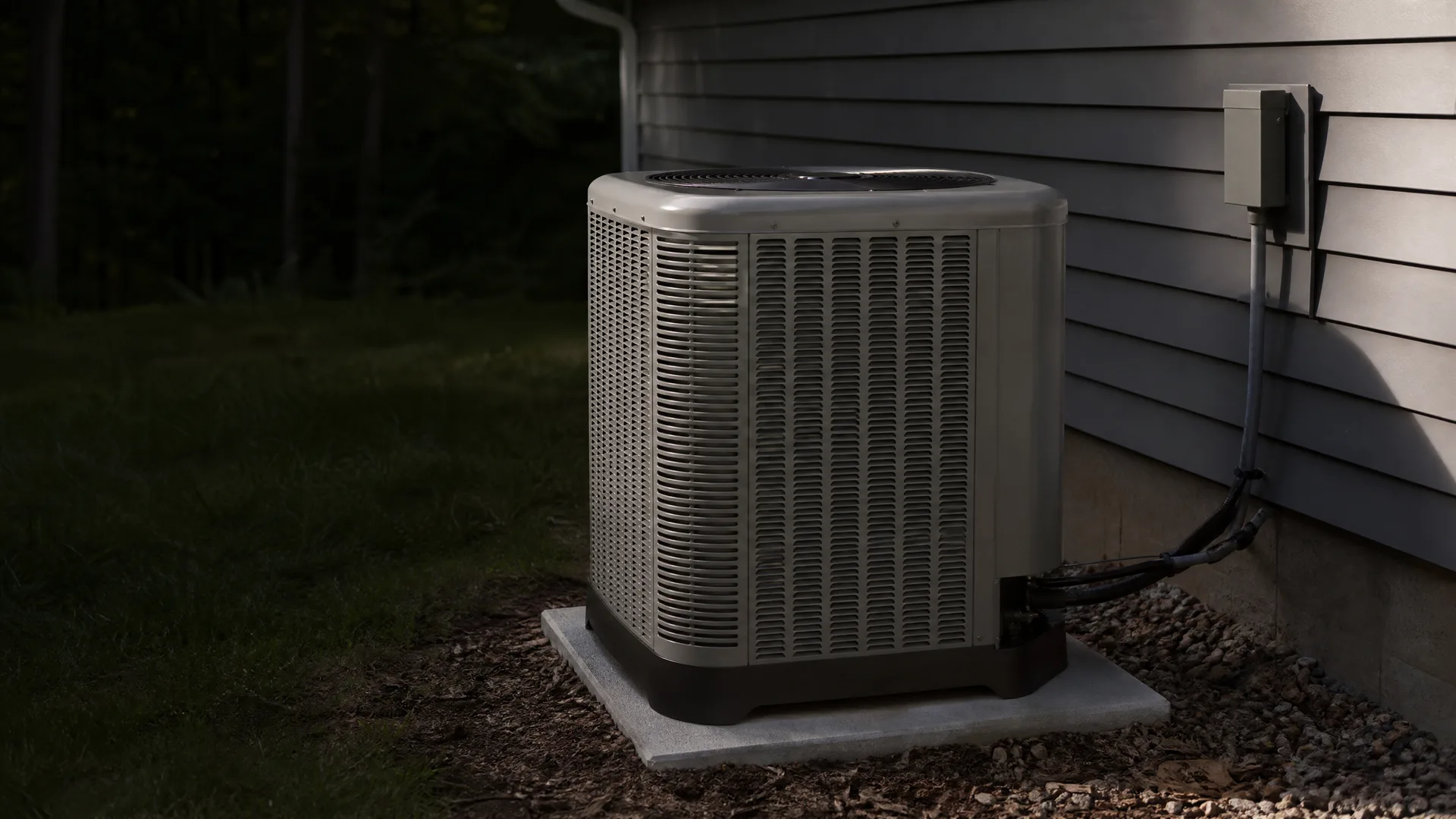
An outdoor air conditioning condenser unit sits on a concrete pad beside a house with horizontal lap siding, with a wall-mounted disconnect box and refrigerant lines entering the wall, gravel and grass around it and dark trees behind.

One form, no calling around

Step 1 of 3: Equipment