Running the way it should
This one starts when the thermostat calls for it. The fins are clean, the lines are wrapped tight, and the compressor pulls steady current through a hot Kansas afternoon without tripping the breaker or shutting itself down.
It's off your list after this
A compressor that won't start can mean a tripped breaker, a bad capacitor, a stuck contactor, or a safety switch shutting things down before damage spreads. In Kansas heat, that's not a wait-and-see problem. This page walks through what's likely going on, and you can skip straight to getting a contractor out instead of calling around yourself.
Hand off the searchIf your compressor won't kick on, the most common causes are a tripped breaker, a failed capacitor, a stuck contactor, or a safety switch that's shutting the system down on purpose. The capacitor gives the compressor its starting push, and when it weakens, the unit hums or clicks but never actually starts. A stuck contactor can keep power from reaching the compressor at all, even when the thermostat is calling for cooling. Safety switches, like a float switch or high pressure switch, cut power on purpose when something else is wrong, so the compressor not starting might be a second problem covering for a first one. In Kansas, where the outdoor unit works hard through long stretches of hot, humid weather, these parts wear faster than in milder climates. A compressor that sits dead on a 95 degree afternoon isn't something to leave alone until tomorrow.


The compressor doesn't decide on its own to run. It waits for 24 volts from the thermostat, and that signal has to pass through a chain of parts before the compressor ever sees power. Start outside. The outdoor unit has its own breaker, so a trip there leaves your furnace blower and indoor parts working fine while the compressor sits dead. Inside that same outdoor cabinet, the capacitor stores a charge even with the unit fully off, which is why this isn't a part to check yourself. Next to it, the contactor is a switch that closes to feed the compressor power. Years of arcing can weld those contacts together, and when that happens the compressor sometimes runs nonstop rather than not starting at all, since nothing is left to open the circuit. Further along, two switches sit directly on the refrigerant lines. The high pressure switch and the low pressure switch both cut power the moment pressure drifts outside the range the system is built to handle, and they're doing their job when they do it. The compressor itself has a built in thermal overload that shuts the motor down if it runs too hot, then lets it try again once it cools. And before any of this, a bad low voltage wire or a failing transformer at the thermostat can stop the call for cooling before it ever leaves the house. A contractor checks this chain in order, not at random, because where it stops tells them what failed.




A safety switch doing its job looks the same from outside as a failed part. The compressor stays off either way, so you can't tell which one it is by watching the unit.
That's why a stuck contactor or a low charge needs a gauge and a meter to tell apart, not a guess. Guessing wrong in a Kansas summer means the same call back next week.



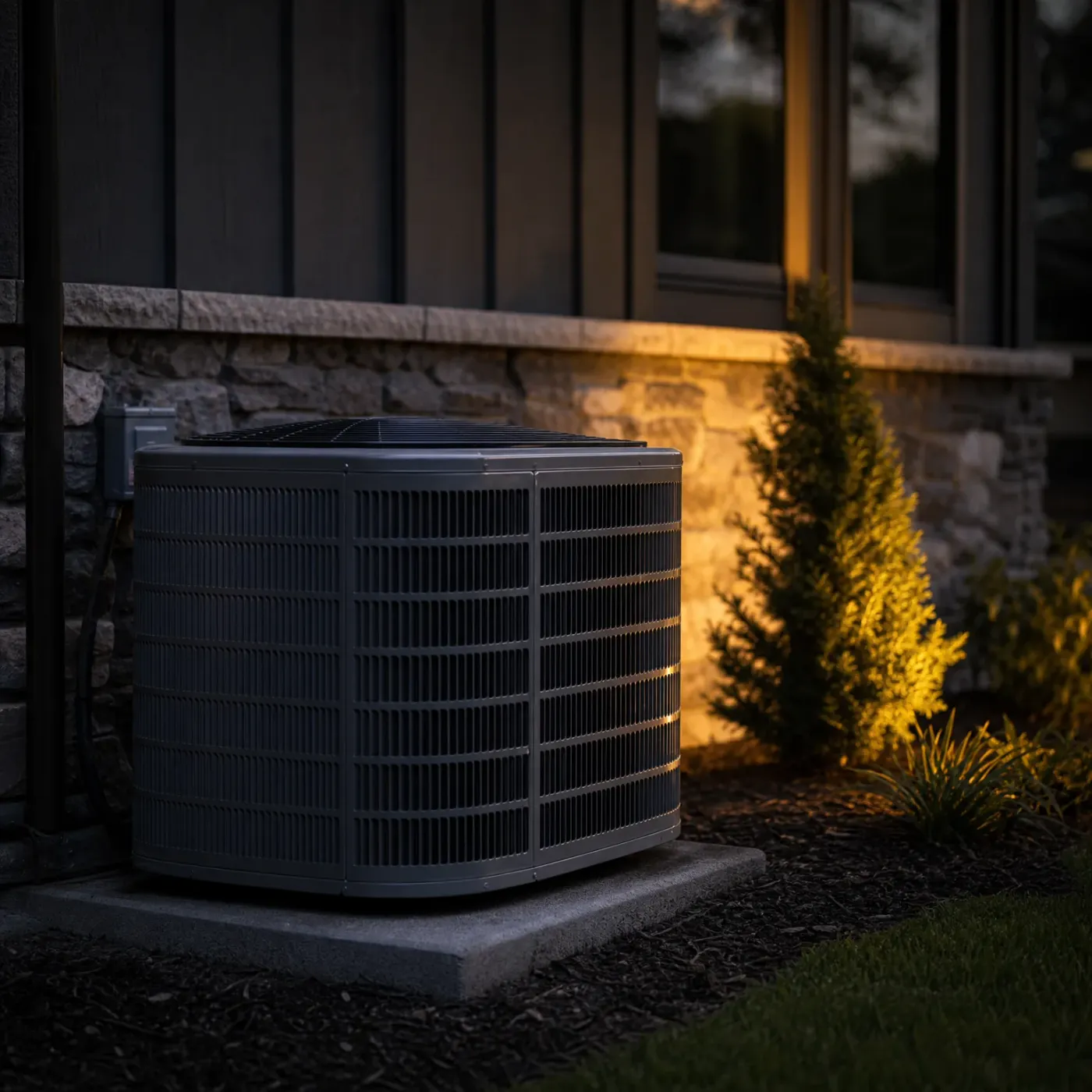
This one starts when the thermostat calls for it. The fins are clean, the lines are wrapped tight, and the compressor pulls steady current through a hot Kansas afternoon without tripping the breaker or shutting itself down.

Years of dirt packed into those fins block the airflow the unit needs to cool itself. The compressor works harder, runs hotter, and a safety switch eventually cuts power to protect it. From outside, it just looks like the unit won't start.
You already know the usual suspects: a breaker, a capacitor, a contactor, a safety switch. What you want to know now is which one to suspect first. A tech doesn't check these in random order. There's a sequence, and knowing it tells you why the fix might be a five-minute reset or might mean a part replacement before the unit runs again this summer.
The breaker gets checked first, because if there's no power at all, nothing downstream matters. Next comes the thermostat and the safety switches, since a float switch or a high-pressure cutoff can hold the compressor off on purpose even with power present. Only after those check out does the capacitor come into question, since a weak one still lets the compressor hum without starting it. The contactor comes last, because its contacts can look fine and still fail to pass current under load. Checking in this order keeps a tech from swapping a capacitor when the real problem is a switch doing its job, which happens more than you'd think when a Kansas afternoon pushes a system hard.

A summer dew point averaging 64°F, the figure NOAA keeps for where Kansas homes sit, is the point where air starts to feel heavy instead of just warm. That load falls on the compressor. It has to run longer to pull the moisture out along with the heat, which means more hours drawing current through a hot contactor and across an aging capacitor. If one of those parts is already weak, a sticky June afternoon is exactly when it gives out. You'll notice it as a system that ran fine in spring and just stopped responding once the air turned thick. When it won't start, you want someone qualified looking at it, not a week of calling shops around Kansas and repeating the problem to each one.
NASA POWER T2MDEW county cells weighted by homes
Fill out one short form instead of calling around.
Asking costs nothing, and the choice to hire stays yours.

No compressor means no cooling, and in a Kansas summer that shows up fast. The air handler's fan might still blow, but it's just moving warm air around the house. Indoor humidity climbs along with the temperature, since nothing is pulling moisture out of the air anymore. If this drags on for days, you're not just uncomfortable. You're running fans and maybe window units to cope, and the house still won't feel right.
A tripped breaker or a bad capacitor doesn't fix itself by waiting. If a safety switch shut the compressor down on purpose, that switch is protecting the unit from something worse, like a refrigerant leak or restricted airflow, and running it anyway risks a bigger repair. A stuck contactor can keep trying to pull current with nowhere for it to go. The part that's failing now tends to take something else down with it the longer it sits.


At 14.44 cents per kilowatt-hour, every extra hour your compressor runs trying to start shows up on the bill. A weak capacitor can make the compressor strain and draw more power before it finally quits, so a quick fix now costs less than letting it limp along.
EIA-861 2025 statewide residential average

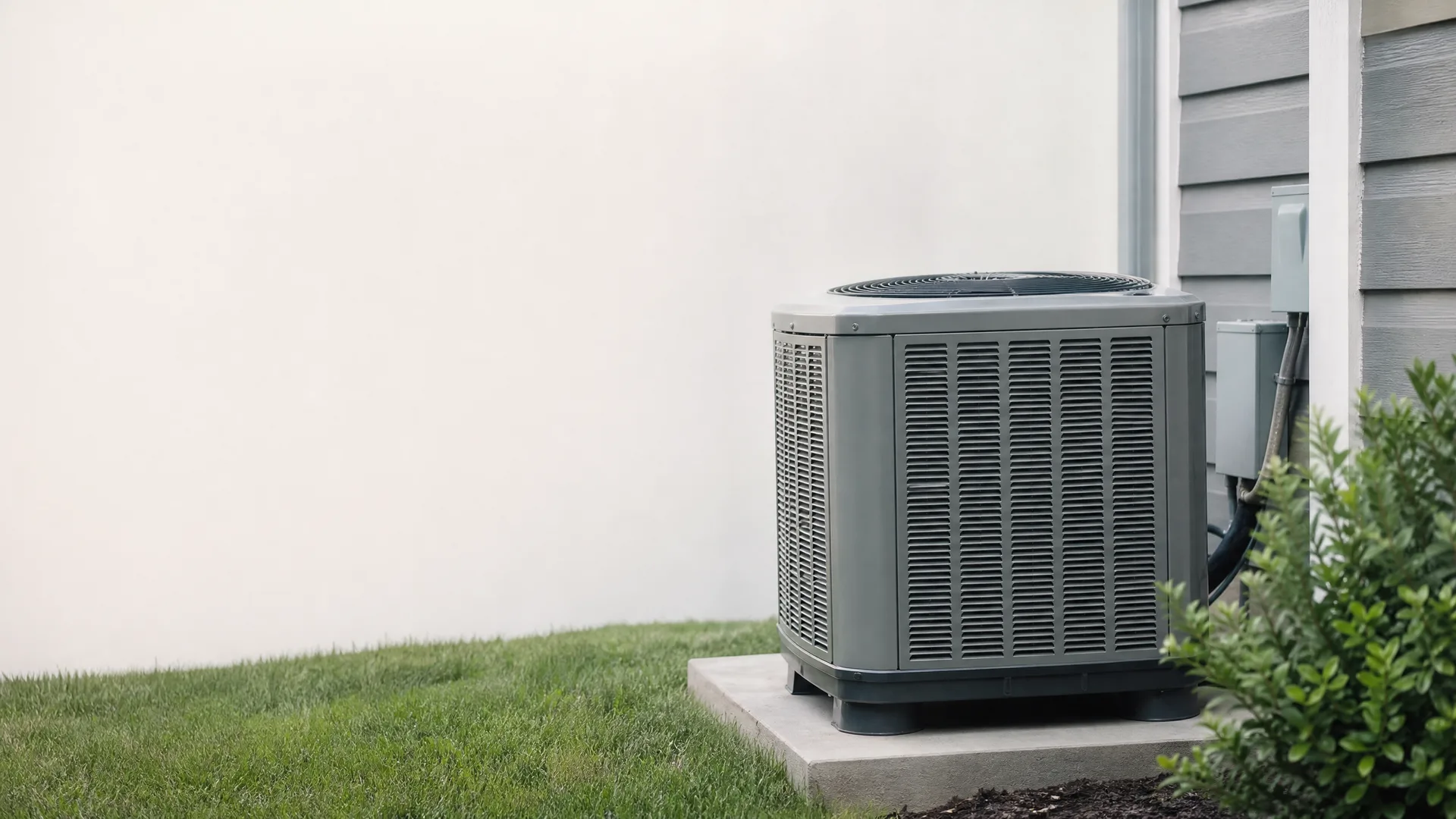
The fins are open and the air moves straight through them. Nothing blocks the coil, so heat transfers off it the way it should. A unit kept clear like this starts on the first call and the compressor isn't fighting anything extra to get going.

Dirt and grime have packed into the coil fins and the cage around them. Air can't pass through like it should, so the compressor runs hotter and works harder to move the same heat. That extra strain is what trips a safety switch or wears out a capacitor sooner than it should fail.

A tripped breaker, a failed capacitor, a stuck contactor, or a safety switch doing its job. One of those four is why your compressor sits silent while the rest of the house stays warm. A meter and a gauge tell a tech which one, and that's not a guess you can make standing in your yard looking at the unit.
You could spend the afternoon calling around, explaining what the unit is doing to one shop, then the next, then sorting through whatever quotes come back. Or you could send this form once and let someone else carry that part. The compressor still needs a tech's hands on it either way. What changes is whether you're the one tracking down who's available this week in Kansas heat, or whether that search is already done.


Stop chasing an air conditioner pro




