
Why your AC can't keep up on hot Kansas days
Why can't my AC keep up when it's really hot outside?
You notice it most on the worst days. The thermostat is set to 72 and the house is sitting at 78, and the air coming out of the vents doesn't feel as cold as it should. The unit is running, it just isn't catching up. On a mild day it has no trouble, so it's natural to wonder if something is actually wrong with it or if it's just the Kansas heat and humidity asking more of it than usual.
Your AC loses ground once it's too far behind to catch up in one cycle
Every air conditioner is sized to pull a certain amount of heat out of your house per hour. On a 95 degree day with Kansas humidity sitting heavy, the house is gaining heat faster than a working system can remove it, so the indoor temperature creeps up instead of holding steady. A healthy unit will still cool the air, just not fast enough to close a gap that keeps growing. If the system is also low on refrigerant, has a dirty coil, or the airflow through the ducts is restricted, that gap opens up on a mild day too. The way to tell the difference is simple. If it only falls behind on the hottest days and recovers fine overnight, that's the heat and humidity. If it struggles on an 80 degree day, something in the system needs attention.


Is this just a hot day, or is something actually wrong?
A few signs tell you it's more than the heat. The unit runs almost nonstop and still can't get the house below the mid 70s. Some rooms feel fine while others upstairs stay warm all afternoon. You might notice the air from the vents is warmer than usual, or there's a hiss, a rattle, or ice on the line outside even though it's 95 degrees. The power bill climbs faster than the temperature does. Left alone, a system working this hard on a day like this tends to wear out the part that's already struggling, and what's a repair now can turn into a full breakdown on the next hot stretch.

Summer humidity in Kansas averages a dew point of 64°F across June, July and August, according to NOAA climate data. That's the muggy, heavy air that makes 90 degrees feel worse than it should. Your air conditioner has to pull that moisture out of the air before the house actually feels cool, and that work falls on the same coil and refrigerant charge that handle the temperature drop. When the coil is dirty or the charge is low, it struggles to do both jobs at once. You end up with a thermostat that says 72 but air that still feels damp and a system that runs longer than it should to get there.
NASA POWER T2MDEW county cells weighted by homes




Power costs 14.44 cents per kilowatt-hour statewide
At 14.44 cents a kilowatt-hour, a struggling AC costs you more than a working one. A unit that runs nonstop on a hot day because of a weak part is pulling power the whole time without getting your house cool. Fixing what's wrong gets you back to paying for cooling instead of paying for strain.
EIA-861 2025 statewide residential average
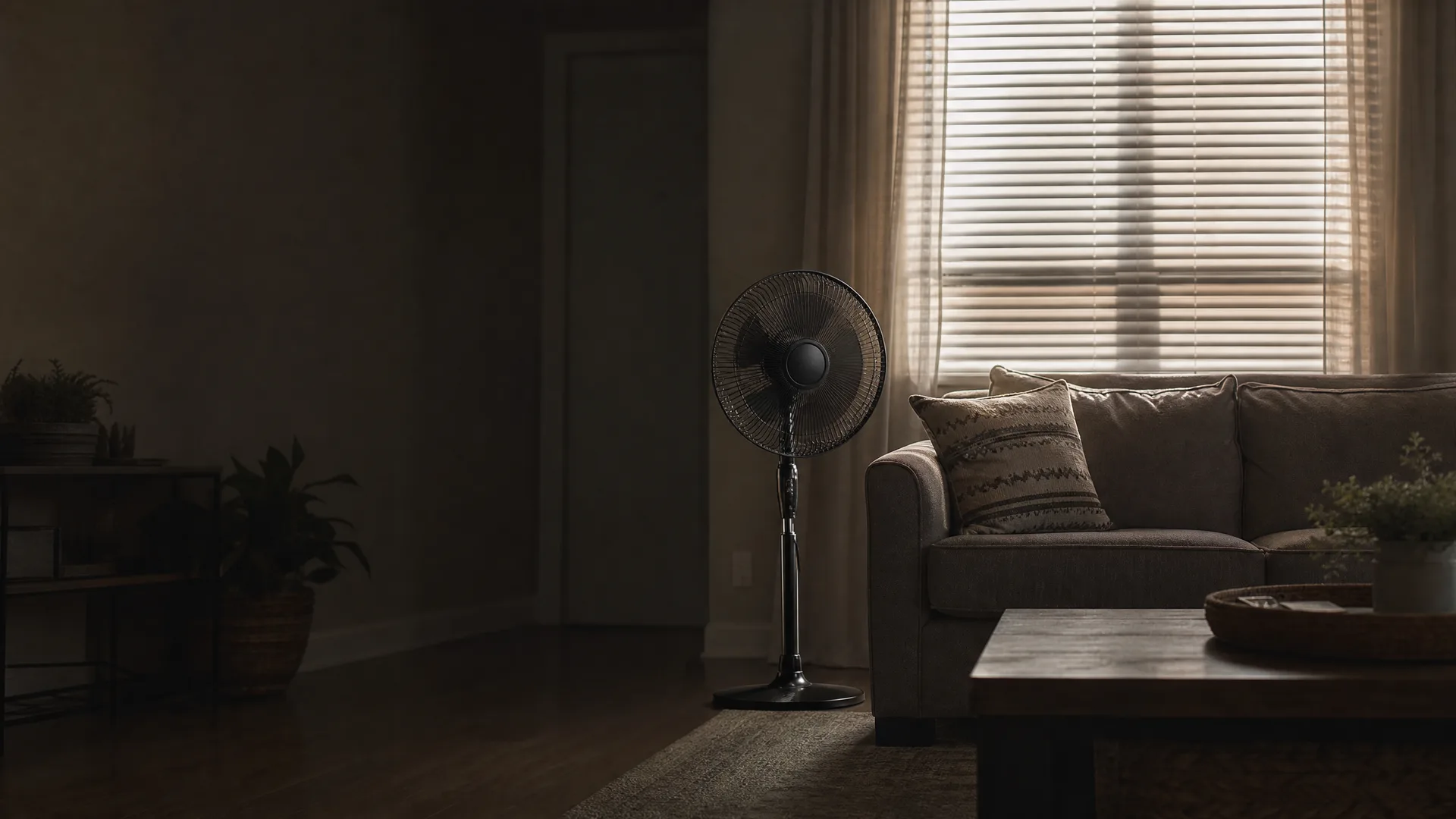
It's a little after three, the worst part of the afternoon. The blinds are drawn against the sun but the light still cuts through at the edges. A box fan sits on the floor by the couch, turned up high, pushing the same warm air around the room. You've got a glass of something cold sweating onto the side table. The vent above the window is blowing, you can hear it, but when you hold your hand up to it the air barely feels cooled. Outside the grass has that flat, bleached look July gives it in Kansas. You've stopped checking the thermostat every few minutes. You already know what it says.
Hand off the air conditioner problem
A system that cuts out on the hottest day usually has one part wearing down, a capacitor losing strength or a condenser coil caked with dust, and it shows up exactly when the heat gives it no room to hide. Figuring out which one takes someone who works on these units all summer, in Kansas heat, and knows what tends to go first when the afternoons turn muggy. That request goes to one contractor, licensed and local, not spread across five companies hoping one calls back. You stop guessing whether it's the capacitor, the coil, or something else, and stop losing afternoons to a box fan and a thermostat that won't move. The house you're sitting in right now, at 78 when it should be 72, is the reason to send it now instead of waiting out another one of these days hoping the unit catches up on its own.
Why Heat Exposes a Weak Part
- Your condenser outside has to dump the heat your indoor coil pulls from the house, and on a 98 degree day it has far less room to do that.
- A dirty condenser coil or a fan that's lost strength cuts how much heat it can throw off right when the outdoor air is already hot.
- Refrigerant has to change pressure and temperature twice each cycle, and a low charge or a worn compressor makes that harder to finish.
- The compressor works hardest exactly when it's hottest outside, so a part that's already weak tends to show its limit on the worst days.
- A clogged filter or a dirty evaporator coil chokes the airflow the whole system depends on to move heat out of the house.
- Once any one of these parts is behind, the thermostat can call for cool air far longer than it should without the house catching up.
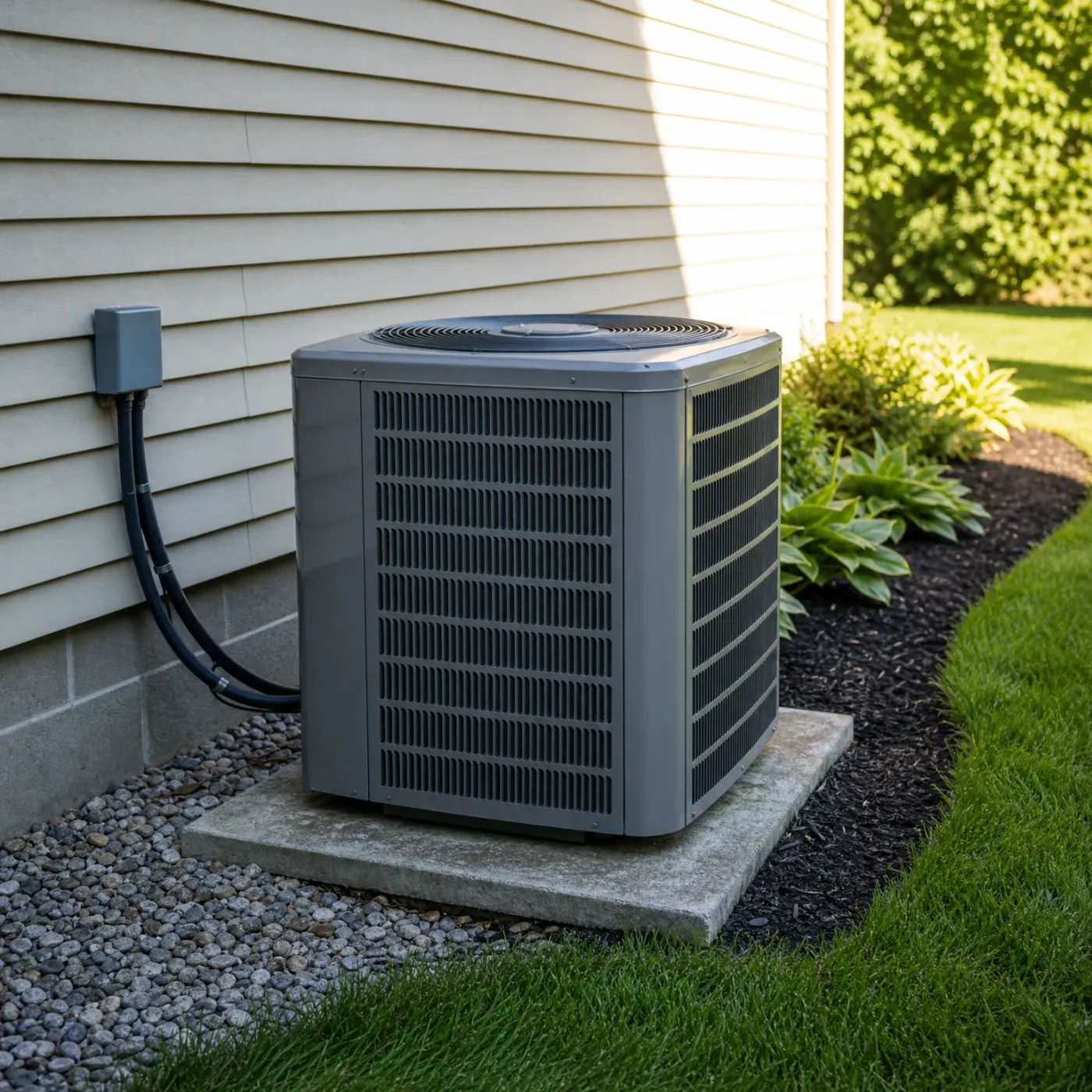
Your air conditioner moves heat out of the house, it doesn't make cold air. The indoor coil absorbs heat from the air in your home, and refrigerant carries that heat outside to the condenser, where a fan blows across it to dump that heat into the outdoor air. On a mild day that exchange happens easily. On a 98 degree day the outdoor air is already so hot that the condenser has far less room to let go of what it's carrying, so any part that's already worn gets asked to do more with less margin.
That's why a dirty condenser coil matters more in August than in April. Dust and grass clippings on the coil act like a blanket, holding heat against the unit instead of letting it escape. A fan motor that's lost some strength moves less air across that coil, same effect. Refrigerant has to drop in pressure and temperature as it moves through the indoor coil, then rise again at the compressor, twice every cycle, and a low charge or a tired compressor slows that whole exchange down.
Airflow matters just as much. A clogged filter or a dirty evaporator coil restricts how much air the system can pull across the indoor coil, so even a healthy compressor can't move enough heat out of the house. Whatever's weak shows up first on the hottest day, because that's when the system has the least room to compensate.


Low Refrigerant or Worn-Out Equipment
Low on refrigerant
- The system loses cold air fast because a leak is letting refrigerant escape somewhere in the line set or coil.
- You'll notice ice forming on the copper line or indoor coil even while the house stays warm.
- Topping off refrigerant without finding the leak means you're back in the same spot within months.
- A gauge reading during a service call shows whether the charge is low and by how much.
- The compressor works harder to make up for the missing refrigerant, which shortens its life.
Undersized or aging equipment
- A unit sized for a smaller house or an older design simply can't move enough heat on a 95 degree day.
- You'll see it struggle most in the afternoon when the outdoor temperature peaks and stays high for hours.
- Parts wear down over the years, so the same system that handled summer fine five years ago may fall behind now.
- A load calculation compares your home's size and layout against what the unit can actually put out.
- Replacing a single worn part sometimes restores enough capacity without needing a whole new system.

What a struggling system sounds like
The outdoor unit runs long stretches without shutting off, and you can hear it working harder than usual, a louder hum or a rattle that wasn't there before. Inside, the vents put out air that feels closer to room temperature than it should. Upstairs rooms stay warm while the thermostat downstairs reads close to where you set it. The system isn't resting the way it does on a mild day, because it can't catch up.

What a repaired system sounds like
A local contractor who works on these systems all summer checks the capacitor, the coil and the refrigerant charge, and fixes whatever's making the unit work against itself. Once that part is replaced or cleared, the unit cycles the way it's supposed to, running, shutting off, running again, instead of grinding through the whole afternoon. The house gets back to the temperature you set, upstairs included, and the vents put out air that actually feels cold.
The heat doesn't create the problem, it just finds it. Your air conditioner has a part that's weaker than it should be, a capacitor, a coil, a fan motor, and on a mild day it covers for that. On a 98 degree day in Kansas, there's no room left to cover. That's the whole answer. Getting it fixed means finding which part is actually behind it, not swapping in whatever's easiest to reach. A contractor local to you who works on these systems all summer has likely seen your exact unit struggle this same way on afternoons like this one, and knows where to look first. You'll be matched with one licensed contractor near you, not a handful of companies competing for the job, so the person who calls is the person who shows up and fixes it. Once that request is in, the work of tracking someone down is off your plate. The house gets back to 72 because the part that was losing the fight gets replaced.
Send one request and you're done looking
The pro who reaches out is licensed in Kansas.
You're not committing to anything by asking.