









When to replace an AC unit in Andover, KS

Send the form and stop researching installers for the new air conditioner.

Hand it off

When should I replace my AC unit in Andover, KS?

Your AC has been struggling to keep up, or it's needed a few repairs lately, and you're wondering if this is the year to replace it instead of patching it again. With summers in Butler County running long and sticky, an AC that can't quite keep pace matters more here than it would somewhere milder, and you'd rather plan the swap than get caught without cooling in July.

Replace it once repairs get frequent or the unit can't keep the house cool on a 95 degree day

Once an AC starts needing a service call most summers, or it runs all afternoon without bringing the house down to temperature, it's telling you it's losing the fight. That matters more here than in places with a short mild summer, because this unit is working hard from April through October. A system that falls behind in June only falls further behind by August, when the heat is worst. If your last couple of summers have meant a repair plus a system that still struggled on the hottest days, that combination is the signal to replace rather than fix again. Waiting usually means paying for another repair and then the replacement anyway, on whatever timeline the heat decides for you.

A man in a navy sweater reclines with closed eyes in a beige armchair in a living room, with a lamp, wooden cabinet, bookshelf, potted plant, and a side table holding a newspaper and mug nearby.
A man in a blue henley shirt reclines on a leather chair with his eyes closed, beside a window, a houseplant, a side table with a newspaper and a dark mug.
A man in a gray sweatshirt reclines with his eyes closed in a dark leather chair, with a bookshelf behind him and a side table holding folded newspapers, a mug, and a potted plant by a window.
A man in a blue sweater leans back on a brown leather chair with his eyes closed and a slight smile, in a room with bookshelves, framed pictures, a potted plant by a window, a folded newspaper and a dark mug on a table.

A compressor is the heart of the system, and once it starts failing, it fails in stages. First the unit struggles on the hottest days. Then it starts shutting off early, or blowing air that isn't cold, because it can't maintain enough pressure to keep the refrigerant cycle going. Ice forming on the lines or the coil is the system telling you it's starved for airflow or refrigerant, and every hour it runs like that puts more strain on a compressor that's already weak. None of this shows up on your electric bill as a single event. It shows up as a slow climb, because a struggling unit runs longer to do the same job a healthy one did in less time. If your unit still runs on R-22, a refrigerant leak turns into an expensive repair just to get it running again, let alone fixed for good. Put a compressor or coil replacement next to that math on a unit that's already 10 to 15 years old, and the repair bill starts looking like a down payment on a problem that isn't solved.

What's really going on inside

  • A central air conditioner that short cycles, shutting off a few minutes after starting, is usually low on refrigerant or has a failing compressor.
  • Warm air blowing from the vents while the outdoor unit still runs often points to a compressor on its way out rather than a simple fix.
  • An AC older than 10 to 15 years that needs a major part like a compressor or coil usually costs more to repair than to replace.
  • Ice on the refrigerant lines or the indoor coil means airflow or refrigerant is low, and running it this way damages the compressor over time.
  • A higher summer electric bill with no change in how you use the thermostat usually means the unit is working harder to do the same job.
  • R-22 refrigerant was phased out, so a unit that still uses it gets expensive to recharge if it leaks.
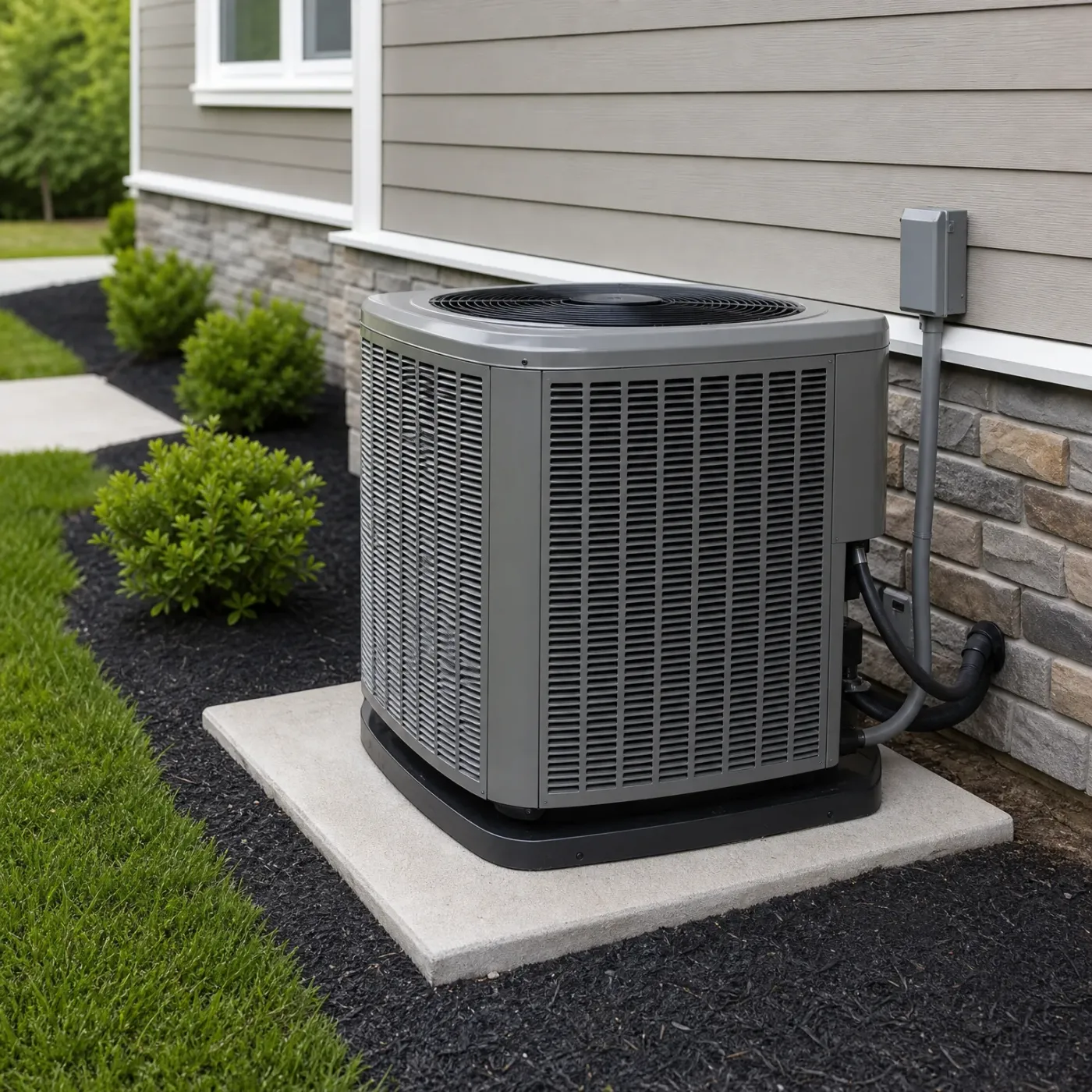
A gray outdoor air conditioning condenser unit on a concrete pad beside a house with horizontal lap siding and a stone veneer base, with a disconnect box and conduit on the wall, mulch bed and shrub to the right, and mowed grass in the foreground.
This condenser sits clean beside the house, running the way it should through another Butler County summer.
An outdoor air conditioner condenser unit on a gray composite pad beside a house with horizontal siding, a concrete foundation, a basement window, and a conduit and disconnect box on the wall.
This one is caked with dust and grime, the kind of strain that wears down a compressor before its time.

An aging AC in Andover shows up in the bill before it shows up in the air. If your unit is pushing fifteen years and your summer power bills have crept up each year without a change in how you use the house, that's the compressor working harder to move the same amount of cool air. You might notice rooms at the far end of the house staying warm no matter where the thermostat is set, or the system running most of the afternoon and evening through July and August instead of cycling off. Keep patching a unit like that and you're paying twice: once for the repair, again for the power it wastes getting through a Butler County summer. There's also the risk of it failing outright on a hot stretch, leaving you without cooling until someone can get a new system in. Replacing it before that happens means you choose the timing instead of the heat choosing it for you.

A gray outdoor air conditioner condenser unit on a concrete pad beside a house with beige horizontal siding, with an electrical disconnect box and insulated refrigerant lines on the wall and dry leaves on the ground.
Before you get your air conditioner installation
A gray outdoor air conditioning condenser unit on a concrete pad beside a house with horizontal gray siding, with a wall-mounted electrical disconnect box and insulated refrigerant lines, and blue hydrangeas in a mulched bed to the left.
After you get your air conditioner installation
A gray outdoor air conditioner condenser unit on a concrete pad beside a house with horizontal siding and a stone veneer base, with a wall-mounted disconnect box, conduit and refrigerant lines, surrounded by black mulch, shrubs and lawn.

Let someone else find the pro

Skip the round of in-home estimates for a new air conditioner.

One request ends the search for an air conditioner installer.

Hand off the search

Sending the form costs nothing.

Cooling runs May through September

Five months of that is a long stretch for an aging compressor to carry. If your unit is already struggling in May, it has four more months to get through before it can rest, and a system on its last legs usually doesn't make it to September.

NOAA nClimDiv 1991-2020

A gray outdoor air conditioner condenser unit on a concrete pad beside a house with light vinyl siding, with an electrical disconnect box and conduit on the wall and a leafy shrub with dark mulch to the right.

Running clean

This condenser is doing its job without a fight. The lines and conduit run neat to the disconnect, the grille is clear, and the unit cycles on and off without strain. A system that looks like this is moving heat out of the house the way it was built to, and the compressor inside isn't working any harder than it has to.


An outdoor air conditioner condenser unit on a concrete pad beside a house with horizontal lap siding, with a gray electrical disconnect box and conduit on the wall and a green shrub over pine-needle mulch at left.

Caked and straining

Dirt packed into the grille like this blocks the airflow the unit needs to shed heat. The compressor behind it is running hotter and longer to do the same job, and that extra strain is what shortens its life. If your outdoor unit looks like this, it's worth finding out whether it's dirt or something further along before July gets here.

A wooden table with a closed laptop, a ceramic mug of dark coffee, and a glass vase of eucalyptus stems beside a window, with a dark green kitchen cabinet, wooden counter, potted herb, cutting boards and bowl blurred in the background.

What an old AC costs you before it quits

A fifteen-year-old unit doesn't fail all at once. It struggles on the hottest afternoons, cycles longer to hold 74, and leaves the upstairs a few degrees warmer than the thermostat claims. You notice it in August, when the house doesn't cool down until after dark. You notice it again when the bill comes.

There's also the risk of it failing on a Saturday in July, when every contractor in Butler County is already booked solid and you're stuck calling one company after another explaining the same problem, hoping someone has an opening before the weekend's over. Sending one form here does that work instead. You stop dialing around and comparing quotes under pressure, and you get matched with a contractor who installs AC systems in Andover homes, on your schedule instead of theirs.

A mug and a small round vase sit on a wooden windowsill beside sheer and heavier curtains, with blurred autumn trees seen through the rain-speckled window and a sofa with cushions and a throw in the foreground.
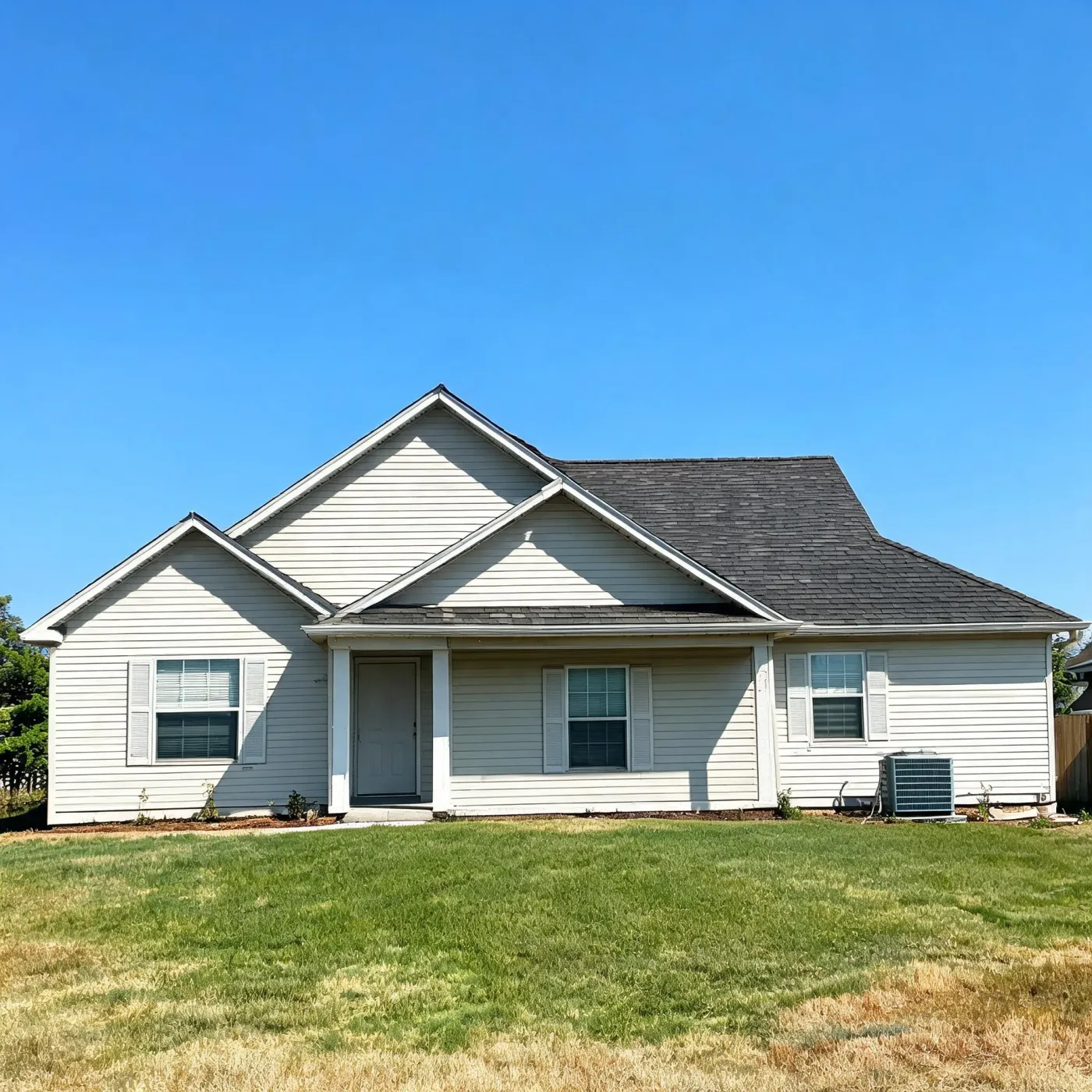
Single-story house with cream vinyl siding, gray shingled gable roof, small front porch with gray door, shuttered windows, and an outdoor AC unit, fronted by a partly dry lawn under a clear blue sky.

That muggy feel in Andover isn't just the heat. Summer dew points here average 65°F, which is the kind of air that makes 85 degrees feel much worse. Your AC isn't only cooling that air, it's wringing the moisture out of it, and that's harder work than dropping the temperature alone. An aging compressor straining to do both is why the house can feel clammy even when the thermostat says it hit the target. A unit running low on refrigerant or losing capacity falls behind on the humidity first, long before the temperature climbs.

NASA POWER T2MDEW

Repair It or Replace It

Repair

  • A single repair, like a capacitor or a contactor, usually costs far less than a new system and can be the right call if the unit is still young.
  • If the compressor and coils are sound, fixing the one part that failed gets you through the rest of summer without a bigger outlay.
  • A unit under ten years old with one isolated problem is usually worth fixing rather than replacing.
  • Repair makes sense if this is the first issue the system has had, not the third in two summers.
  • Parts for a working unit are often still available, so the repair itself is usually straightforward once the problem is found.
  • If your power bills have held steady and the system still holds its set temperature, there's no reason to replace it yet.

Replace

  • A new system comes with a warranty on every part, so you're not paying out of pocket again if something fails next summer.
  • Replacing an aging unit stops the pattern of repeated service calls that each fix one thing while the rest of the system keeps wearing down.
  • A new compressor and coil set run without the strain that's been driving your summer power bills up each year.
  • If the unit is pushing fifteen years, replacement avoids a breakdown in the middle of a July heat wave with no cooling until parts arrive.
  • A properly sized new system handles Butler County's humidity without the long cycle times an old one needs to hold the same temperature.
  • Once you replace, you stop guessing whether the next repair bill is worth it, because there isn't a next one for years.
An older man with gray hair and a navy knit sweater sits in an armchair with his eyes closed, near a bright window with potted green plants.
A woman in a cream knit sweater sits in an armchair indoors, eyes closed and smiling, beside a window showing yellow and orange autumn foliage, with a mug on a wooden side table and shelves holding vases behind her.

Where your AC stands now

  • An AC pushing fifteen years that's needed more than one repair in the last year or two is a reasonable one to replace.
  • Rising summer power bills with no change in how you use the house point to a compressor losing its ability to cool efficiently.
  • A system struggling to keep up in May has four more months of Andover summer to get through before it can rest.
  • Short cycling, warm air from the vents, or heavy dirt on the condenser are signs the unit is closer to the end than the middle.
  • A single repair still makes sense when the compressor and coils are sound and the part that failed is isolated.
  • Once you know which side of that line your system falls on, the next step is finding someone to install the replacement.

You've got a way to read your own system now. Age, the number of repairs, the power bill, how it's handling the first warm days, the look of the condenser outside. None of these alone tells the whole story, but together they point one way or the other. A unit under ten years old with one failed part is almost always worth fixing. A unit pushing fifteen years that's already struggled once this spring, with a power bill that's crept up and a condenser caked in grime, is telling you it won't make it through another Andover summer without more trouble.

If you've landed on replace, the work ahead isn't just the install. It's finding a contractor who does this well, getting someone out to look at the unit, explaining what it's been doing, waiting on a quote, maybe doing that two or three more times to compare. That's hours of calls and waiting spread across days you don't have to spare once the heat sets in.

Sending the form on this page skips that part. You're not left to search out contractors on your own or repeat the same explanation to the next one. That piece of it is handled, and what's left is the part that actually matters: getting the new system in before the next stretch of 90-degree days finds out the old one couldn't.

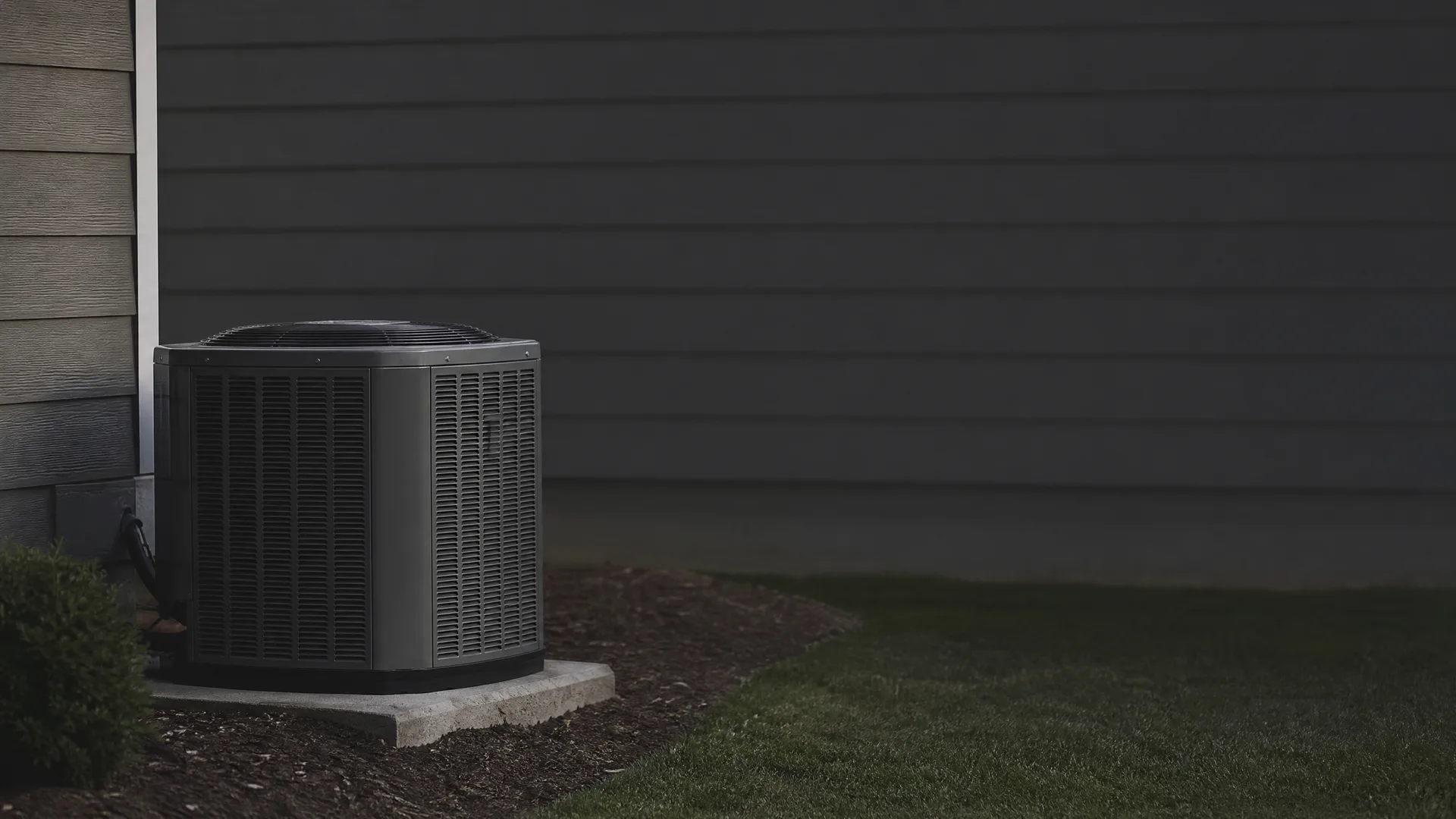
An outdoor air conditioning condenser unit on a concrete pad beside a house with dark horizontal siding, surrounded by mulch, a small shrub, and lawn.

One request and it's handed off

Describe the project once instead of to every installer.

Step 1 of 3: Equipment