How to get your AC ready for a Kansas summer

Step 1 of 3: Equipment

Getting your AC ready for summer means having it checked before the heat sets in, not after. In Kansas, that window is small. Temperatures can climb fast once spring ends, and a system that was fine in April can struggle the first week it has to run all day. A technician checks the refrigerant charge, cleans the condenser coil, tests the capacitor, and makes sure the system can actually keep up once it's running for hours at a stretch instead of minutes. Dust and pollen build up on the outdoor unit over winter, and a dirty coil makes the whole system work harder to do the same job. Catching a weak part now means it gets fixed on a mild day, not during a July heat wave when every other AC in town is also down and appointments are backed up.

A gray-haired, bearded man in a dark coat dusted with snow stands smiling in a dimly lit room with a lamp, mirror, framed art, and a sofa in the background.
An older man with white hair and a beard, wearing a dark snow-dusted coat and scarf, stands in a warmly lit interior hallway with a framed landscape picture, a table lamp and a potted plant behind him, and a snowy view through a window at left.
An older man in a dark snow-flecked overcoat and scarf stands smiling in a warmly lit home entryway, with a glass-paned door showing darkness outside and a lamp-lit room visible through a doorway behind him.
An older man with gray hair and a beard, wearing a dark snow-dusted jacket and scarf, stands smiling in a warmly lit interior hallway with a lit table lamp, a vase of dried branches, and a framed picture in the background.

Tune It Up Now or Risk It in July

Spring tune-up

  • A contractor checks the refrigerant charge before the first 90-degree week finds it low.
  • Cleaning the condenser coil now means it can actually shed heat once it's running most of the day.
  • Worn contactors and weak capacitors get caught on a bench, not during a service call in July.
  • The condensate drain gets cleared before summer humidity has it backing up onto your floor.
  • A system checked in April runs across a known baseline, so anything that changes later is easier to spot.

Waiting until it's hot

  • By the time it's 95 degrees out, every contractor in Kansas has a backlog of calls just like yours.
  • A dirty coil or low charge still runs, just worse, so the system limps along until something gives out.
  • Parts under stress in peak heat fail harder than the same parts would in milder weather.
  • You're explaining the same problem to every contractor you call instead of booking a known tune-up.
  • If the system does quit in August, you're without cooling while you wait for someone to open up a slot.
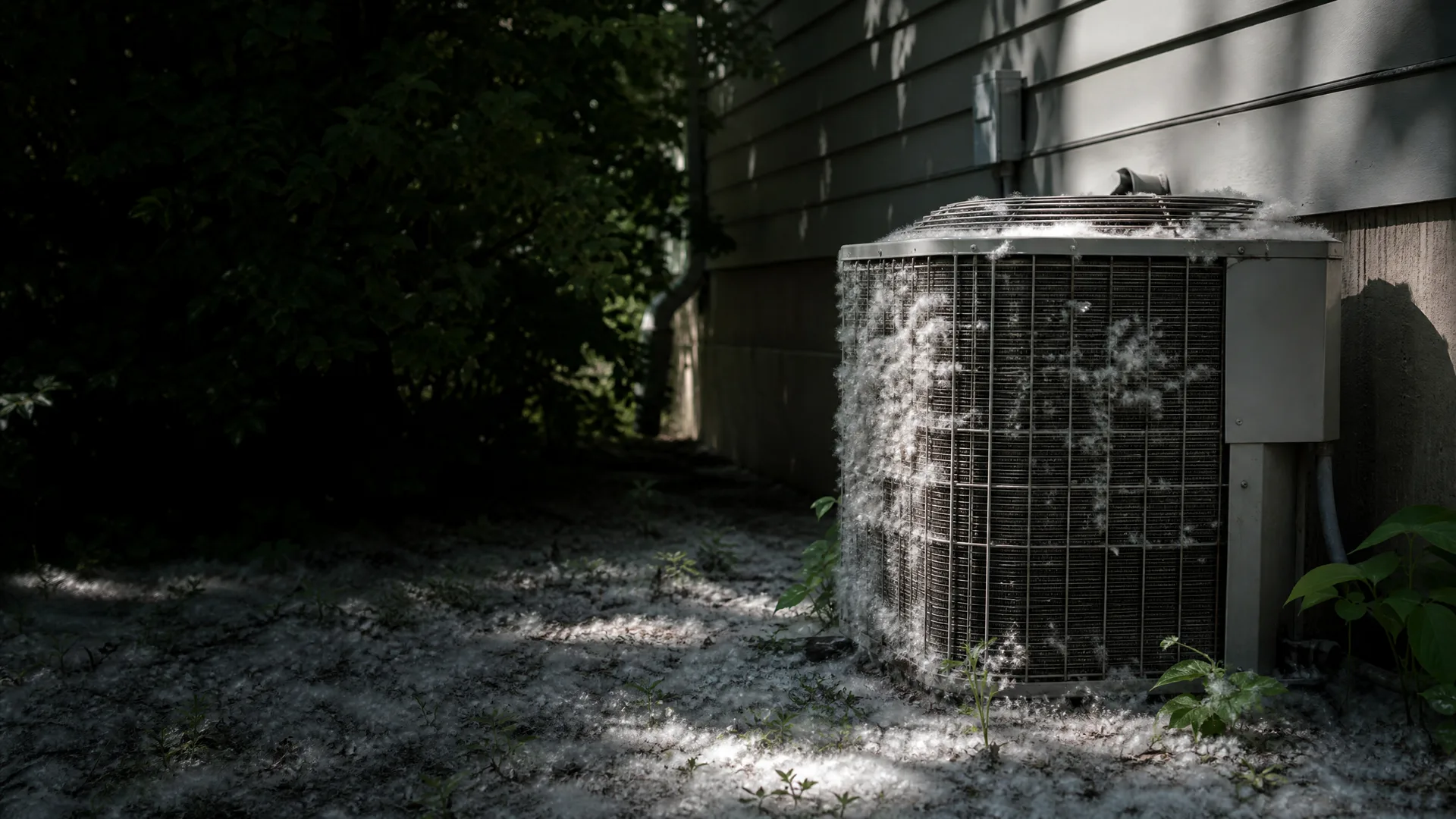
An outdoor air conditioner condenser unit beside a house with horizontal siding, its coil covered in white cottonwood fluff that also blankets the ground around it.

You go out to check the condenser before the real heat starts, the way you do most years in late spring. The cottonwoods along the fence line have been shedding for days, and the fluff has caught in the fins like a layer of dryer lint, white and packed tight across the whole side of the unit. You run a hand over it and it doesn't budge. The grass under the fence is covered in the same stuff, drifted against the gate. You know what this means for the unit if it sits like this through June: it can't pull air through to shed the heat it's supposed to let go of. You make a note to get it cleaned out before the first stretch of 90-degree days turns this into a bigger problem than a dirty coil.


What does a spring AC tune-up in Kansas actually include?

You want to know what you're paying for before a contractor shows up. "Tune-up" can mean a quick look or a real service call, and you'd rather not find out which one you got after the fact, when the system is already three weeks into running every afternoon.

It covers the refrigerant charge, the coil, and the electrical parts that wear out first

A contractor checks the refrigerant charge against what the system is supposed to hold, since low charge is the most common reason an AC runs long and still doesn't cool. The outdoor coil gets cleaned, because a coil caked with cottonwood fluff or dust can't shed heat the way it needs to once your Kansas afternoons hit the 90s. The contactor and capacitor get tested, since those are the two electrical parts most likely to fail from a season of starts and stops. The condensate drain gets checked so it isn't clogged going into the months it will see the most use. Airflow across the indoor coil gets checked too, often tied to when the filter was last changed.

A woman wrapped in a cream textured blanket sits in an armchair beside a lit lamp and a dark window, with an open book in the foreground.
A smiling older woman with gray hair in a cream knit sweater stands in a dimly lit kitchen beside a window showing snow outside, with a round loaf of bread on the counter in the foreground.
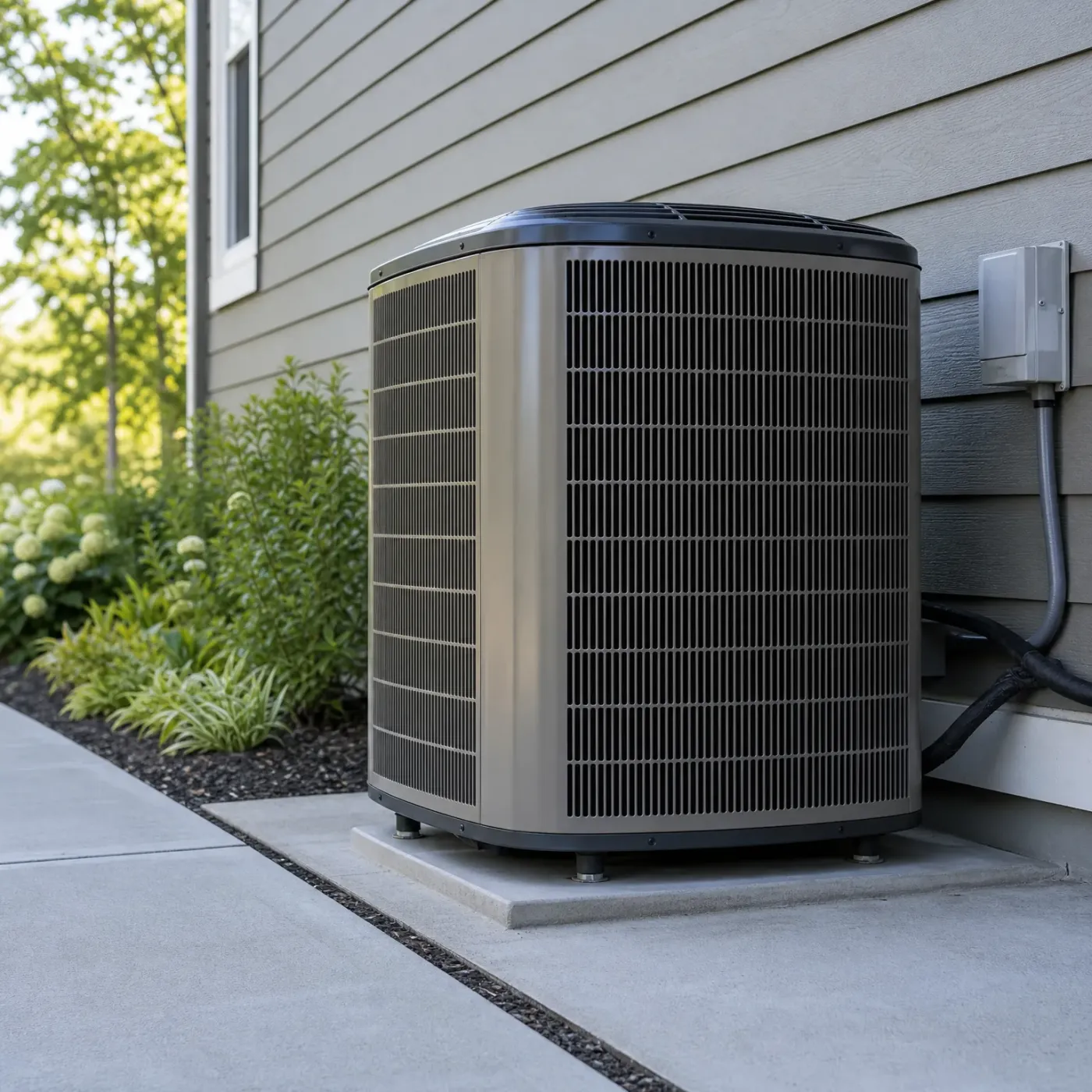
An outdoor air conditioning condenser unit on a concrete pad beside a house with horizontal lap siding, with a gray electrical disconnect box and conduit on the wall and green shrubs and trees to the left.

Get your air conditioner to the right pro

One form replaces the calls you'd make to find an air conditioner pro.

A local pro who services air conditioners gets in touch about the tune-up.

Start one form

No fee to send it, and nothing to sign.

Is my AC already telling me it's not ready?

Turn it on before you need it and pay attention. Air that comes out warm, or barely moving, or smelling musty when it kicks on, all mean something to look at now instead of in July. Listen for a rattle at the outdoor unit or a hum that doesn't turn into the compressor starting. Watch how long it runs to bring a room down a few degrees. If it cycles on and off fast, or runs long and the house still feels sticky, the system is working harder than it should to do the same job. Run it like that through a Kansas summer and the strain adds up, on the compressor and on the power bill both.

A gray outdoor air conditioner condenser unit sits on a concrete pad beside a house with horizontal lap siding, with conduit and an electrical disconnect box on the wall, dark mulch and a shrub to the left, and a concrete walkway in the foreground.

Serviced before summer

This is what a condenser looks like when it's kept up. The grilles are clean, the pad is clear, and the lines running into the wall are doing their job without strain. A unit like this can move heat all day in July without tripping the breaker or icing up on a Tuesday afternoon.

An outdoor air conditioning condenser unit on a concrete pad beside a house with horizontal lap siding, with a shrub and mulch bed to the left and conduit and a small electrical box on the wall to the right.

Left to face summer alone

Dirt has built up on the grilles here, and it's been a while since anyone looked twice at this unit. A condenser running like this works harder to move the same heat, and that shows up on the power bill before it shows up as a breakdown. By August it may not show up as either, just warm air.

An outdoor air conditioner condenser unit on a gray composite pad beside a house with horizontal siding, a concrete foundation, a basement window, and a conduit and disconnect box on the wall.
Before you get your air conditioner maintenance
A gray outdoor air conditioning condenser unit on a concrete pad beside a house with horizontal lap siding and a stone veneer base, with a disconnect box and conduit on the wall, mulch bed and shrub to the right, and mowed grass in the foreground.
After you get your air conditioner maintenance

1 degree per year

A dirty condenser coil can cost a system about a degree of cooling capacity a year. A few summers of buildup and it is working harder to do less.

Skip calling around

Missed in July

A contractor checking refrigerant and electrical parts in spring catches what a mid-summer breakdown would otherwise force you to deal with on the hottest day of the year.

Skip calling around

Power costs 14.44 cents per kilowatt-hour statewide

At 14.44 cents a kilowatt-hour, every hour your AC runs long or hard shows up on the bill. A unit low on refrigerant or dragging a dirty coil pulls more power to do the same job, all summer.

EIA-861 2025 statewide residential average

Where your AC stands now

  • A spring check catches a weak capacitor or a low charge before the first stretch of 90-degree days arrives.
  • A clean condenser coil and clear airflow let the system cool the house without running longer than it should.
  • Skipping the check doesn't save the summer's run time; it just moves the problem to July, when it's harder to schedule.
  • Finding a contractor, calling around, and comparing quotes takes time most people don't have before the heat sets in.
  • Getting matched with someone who services Kansas systems means you explain the situation once, not to every shop you call.
  • A system checked now is the one least likely to leave you without cooling on the hottest day of the year.

A spring check is what separates a summer of steady cooling from a breakdown on the one day you can't wait for a repair. The refrigerant charge, the capacitor, the condenser coil: each one holds up fine under light use and shows its weakness only once the heat sets in and the system has to run for hours at a stretch. Catching that in April or May costs you an afternoon. Catching it in July costs you the hottest week of the year, and a contractor's schedule that's already full of people in the same spot.

The part of this that actually takes effort isn't the tune-up itself. It's finding someone to do it. Searching for a contractor, calling two or three to compare, explaining the same noise or the same warm air coming out of the vents to each one, then sorting through what they quoted you and what that even included. That's the work that piles up before anyone touches your condenser.

Getting matched with a contractor who services Kansas systems skips that part. You explain the situation once, to the person who's going to show up and look at it, not to a string of shops you're trying to narrow down. What you're left with is the system itself, checked before it has to prove itself on a 95-degree afternoon, instead of after.

A wooden front door with six small glass panes and a narrow sidelight, set in a shingled house entry with white trim, reached by stone steps flanked by a planted urn with purple flowers and leafy branches in the foreground.
Exterior corner of a house with beige horizontal lap siding and a black-framed window, with white hydrangeas, ornamental grasses and low plantings along a flagstone patio.
Corner of a house with tan lap siding and a window, a brick step edge, flowering white hydrangeas and green shrubs beside a flagstone walkway leading to a white picket fence and a tree in backlit sunlight.
House exterior with cream horizontal lap siding, a dark-framed window, a black wall lantern beside a wood door, potted shrubs on stone steps, and white and pink hydrangeas in the foreground garden.
Corner of a cream lap-sided house with a white-framed window and dark shingled roof, beside a white-flowering hydrangea shrub, a clipped hedge, mulched bed and lawn.

Matched to your air conditioner job

One form instead of hunting for a pro who does air conditioner tune-ups.

Fill out one form

You're not committing to anything by asking.