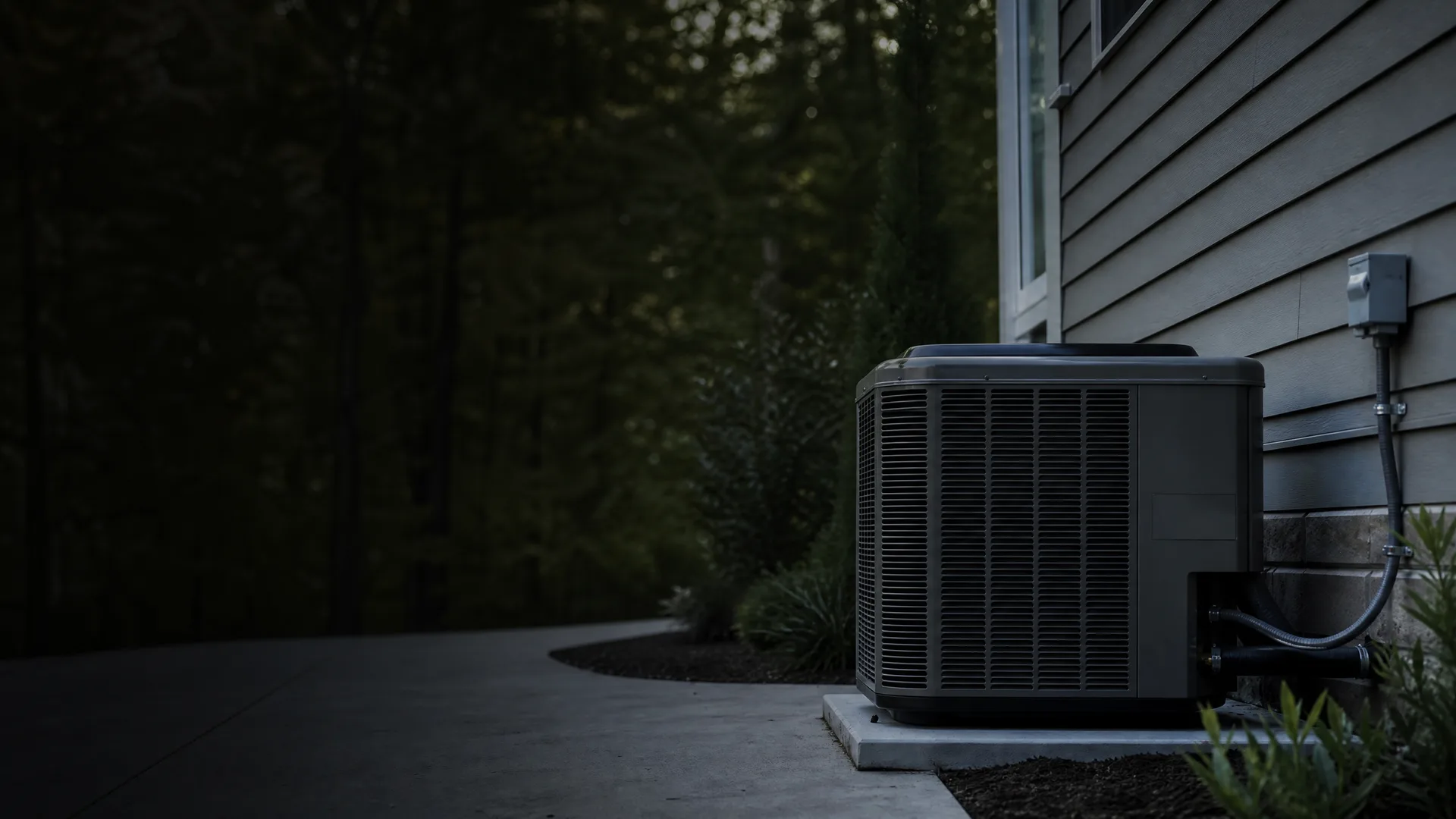
An outdoor air conditioning condenser unit on a concrete pad beside a house with horizontal siding, with an electrical disconnect box on the wall and shrubs to the right in low evening light.

Matched to your air conditioner job

How long an AC should run on a hot Kansas day

On a hot Kansas day, your AC should run long stretches, sometimes most of the afternoon, and that's normal. The question is whether it's running that long because the heat calls for it or because something is making the system work harder than it should. This page gets into what's typical and what's worth a second look. If yours seems off, finding someone to check it usually means calling around and explaining the same thing twice. Skip that part.

Find a pro near me

On a hot Kansas day, your AC can run 30 to 45 minutes at a stretch, cycling off for a short break, then starting again. On the worst days, with heat and humidity both high, it may run almost nonstop from early afternoon into evening. That's the system doing its job. The heat coming into the house has to be matched by the cold air going out, and a muggy Kansas afternoon asks a lot of it. What should worry you is a system that never shuts off at all, or one that runs long but the house still feels warm and sticky. That points to something making the unit work harder than the weather alone explains, a low refrigerant charge, a dirty coil, a failing capacitor. A system that's kept up with tends to cycle the way it's supposed to, even on the hottest days. One that's fallen behind on maintenance is more likely to run long and still lose the fight against the heat.

An outdoor air conditioner condenser unit on a concrete pad beside a house wall, with a gray electrical disconnect box and conduit above it and grass in the foreground.

What makes a cycle run long

Your AC sizes to the heat it expects on an average summer day, not the worst one. When it's 95 or higher with the humidity sitting heavy, the unit has to pull more moisture out of the air before it can even start cooling it down. That takes time. A long cycle on a day like that isn't the system struggling, it's the system doing the job it was built for under a harder load than usual.

A gray outdoor air conditioner condenser unit on a concrete pad beside a house with horizontal lap siding, surrounded by white gravel and a lawn, with a white wall at left.

A sign worth checking for

If the outdoor unit is running most of the day but the house still feels warm by evening, or if one cycle runs long and the next one starts again within a few minutes instead of after a real break, that's worth paying attention to. A system working normally cools the house down enough to earn a rest. One that can't catch up is telling you something, even if nothing has failed outright yet.

Is your AC running longer than it used to?

You know your house. If the AC used to shut off and you'd get an hour of quiet before it kicked back on, and now it's running almost the whole afternoon on days that aren't any hotter than last July, that's worth paying attention to. Maybe the air coming out of the vents doesn't feel as cold as it should. Maybe one room stays warm no matter how long the system runs. Maybe the bill crept up more than the weather explains. None of that means the AC is about to quit on you, but a system working harder than it needs to tends to keep working harder until something gives out, usually on the next hot day, not the mild one.

A gray outdoor air conditioner condenser unit on a concrete pad beside a house with horizontal lap siding, with a wall-mounted disconnect box and conduit at left and a green shrub and mulch bed at right.

Running long because the heat calls for it

The unit cycles on, runs 30 to 45 minutes, shuts off, then starts again a while later. The conduit and disconnect box are doing nothing unusual. This is a system keeping up with a 95 degree afternoon, not one struggling against it.


An outdoor air conditioner condenser unit on a concrete pad beside a house with horizontal lap siding, with a conduit running to a gray electrical disconnect box on the wall.

Running long because something's working against it

Same unit, same siding, same conduit to the disconnect box, but it never gets that quiet break. It runs on and on through the evening when the heat outside has already backed off. That's a sign worth having a contractor look at before next summer.

An outdoor air conditioning condenser unit on a concrete pad beside a house with horizontal siding and a concrete foundation, with dry brown leaves on the ground to either side.
Before you get your air conditioner maintenance
A gray outdoor air conditioning condenser unit on a concrete pad beside a house with horizontal lap siding, with a wall-mounted disconnect box and conduit, and shrubs to the left.
After you get your air conditioner maintenance

An air conditioner pro near you

A system that's been maintained runs those long summer stretches because the heat calls for it, not because a dirty coil or a low charge is making it work harder than it should. That's the difference maintenance is meant to catch, before a hot stretch in July turns a normal long cycle into a system running nonstop and still falling behind. Finding that out on your own means tracking down a contractor, explaining what the unit's been doing, waiting on a call back, then doing it again with the next name on the list if the first one doesn't work out. Getting matched means someone who services Kansas systems reaches out to you instead, and you explain it once. With gas heat covering winter here, your AC is the system carrying the hard part of the year on its own, and a hot day with no relief coming is not the time to find out it's been struggling longer than it needed to.

An outdoor air conditioner condenser unit on a concrete pad beside a house with beige horizontal siding and a stone-veneer base, with refrigerant lines running to a gray wall-mounted electrical box, surrounded by dark mulch, a flowering shrub and an evergreen on the left.

Running normally

The unit cycles on, runs its stretch, and shuts off on its own. The disconnect box and wiring sit untouched, doing nothing out of the ordinary. Mulch beds and shrubs around the pad show a yard that gets regular attention, and so does the system.

An outdoor air conditioning condenser unit on a concrete pad beside a house with light vinyl siding, an electrical disconnect box and conduit on the wall, bare shrubs and mulch to the right, and a concrete walkway in the foreground.

Running into trouble

The unit sits bare of any upkeep around it, shrubs gone dry and nothing tended nearby. A system left alone this way is the one that runs longer than the heat alone would ask for. That's what a maintenance visit is there to catch before July turns worse.

A woman with long gray hair wrapped in a checked blanket sits on a sofa by a window with yellow autumn foliage outside, with a lamp, framed picture and plant in the background.
An older woman in a cream knit sweater sits on a sofa by a window, looking out at sunlit trees with yellow and orange autumn leaves, with a bookshelf and lamp behind her.
A woman with gray shoulder-length hair in a dark knit sweater sits on a cushioned seat by a window, looking out at yellow autumn foliage, with a living room, armchair, houseplant and framed picture behind her.
An older woman with gray hair in a bun, wearing a cream knit sweater, sits on a sofa with a gray blanket and looks out a large window toward yellow-green autumn trees, with a lit table lamp and dark armchair behind her.

Getting maintenance done every year

You get the condenser coil cleaned, the refrigerant charge checked, and the electrical connections looked over before the heat sets in. If something's starting to wear, like a capacitor losing its strength, it gets caught in the spring instead of on a July afternoon when it's 97 degrees and every contractor in Kansas is booked solid. You already know who's coming and you're not starting from scratch explaining your system to someone new.

Waiting until something runs long or quits

You notice the AC running longer than it should, or not cooling the house down at all, and now you're calling around on a day you didn't plan for. You're explaining your symptoms to two or three contractors to compare quotes, waiting on callbacks, and hoping someone can fit you in soon. Whatever's wrong has usually been building for a while by then, a dirty coil or a weak capacitor, and it picked the worst week to fail outright instead of showing itself as a small problem first.

Power costs 14.44 cents per kilowatt-hour statewide

At 14.44 cents a kilowatt-hour, those long afternoon stretches add up on the bill either way. A system pulling its rated amps for an extra hour costs you about what that math says it should. A system working harder than it needs to, because of a dirty coil or a weak charge, costs more than that math says it should.

EIA-861 2025 statewide residential average

An outdoor air conditioning condenser unit on a concrete pad beside a house with white horizontal lap siding, with an electrical disconnect box and insulated refrigerant line on the wall and a shrub over mulch to the right.
The lines are clean, the pad is clear, and the unit cycles on its own schedule without strain.
An outdoor air conditioner condenser unit on a concrete pad beside a house with light horizontal lap siding, with an electrical disconnect box and conduit on the wall behind it.
Age and weathering alone don't slow a system down, but a coil or charge that's gone unchecked will.
A woman in a cream knit sweater sits in an armchair with her eyes closed and a slight smile, beside an open window showing orange autumn foliage, with a mug, books and a lit candle on a small side table.
An older man with gray hair and a beard leans back on a beige sofa with his eyes closed, in a sunlit room with potted plants, a wicker chair and large windows behind him.

What a long run tells you

  • On a hot Kansas day, 30 to 45 minute runs with short breaks is the system working the way it should.
  • Nonstop running from afternoon into evening on the worst days is normal too, as long as the house is cooling down.
  • A longer stretch than last summer at the same temperature outside points to a dirty coil, a low charge, or a weak capacitor.
  • Finding that out on your own means a service call to look at the coil, the charge, and the electrical connections.
  • Skipping the search for a contractor, the calls, and comparing quotes still leaves the question of whether the system is running long for a good reason.
  • Where you stand now depends on whether this year's long runs match last year's, not just on how high the thermometer reads.

A long run on a hot Kansas day isn't the problem by itself. Thirty to forty five minutes with a short break is normal. Nearly nonstop from afternoon into evening on the worst days is normal too, if the house is actually cooling down while it runs. What matters is whether this year's stretch matches last year's at the same outside temperature. If it doesn't, something is making the system work harder than the heat alone would ask of it, a dirty coil, a low charge, a capacitor that's lost its strength.

Finding that out yourself means a service call just to get a look at the coil, the charge, and the electrical connections, and that's before anything gets fixed. Most homeowners don't get there on the first try. There's the search for a contractor who's available, the calls to a few of them, explaining the same thing about the long runs and the thermostat each time, then comparing quotes that don't line up because each one looked at something different. None of that tells you on its own whether the system is running long for a good reason.

Getting matched with a contractor who looks at this kind of thing skips that part. It doesn't change what they find when they check the coil or the charge, and it doesn't make the heat any easier on the system. It just means you're not the one tracking down who to ask.

An outdoor air conditioner condenser unit sits on a concrete pad beside a house with horizontal lap siding, with a refrigerant line, electrical disconnect box, a concrete driveway and dark trees in the background.

A local pro for your air conditioner maintenance

Fill out one short form instead of calling around.

Step 1 of 3: Equipment