
AC unit frozen up in Leavenworth, KS

Your request goes to a Leavenworth County pro who takes air conditioner jobs.

Get matched

Why is my AC unit frozen up in Leavenworth, KS?

You walked outside or down to the basement and found ice on the refrigerant lines or coil, maybe even the unit has stopped cooling the house altogether. It's alarming to see ice form on something that's supposed to be making cold air, especially when it's hot and sticky outside and you need the system running. You want to know what's causing it and whether it's something you should worry about.

It's almost always low airflow or low refrigerant

An air conditioner freezes up when the coil gets too cold, and that happens one of two ways. Either not enough air is moving across it, usually from a dirty filter or blocked vents, or the refrigerant charge is low, often from a slow leak. Either way the coil drops below freezing and moisture in the air turns to ice right on it. Once ice builds up, it blocks airflow even more, so the problem gets worse the longer the system keeps running. Shutting the unit off and letting it thaw is the right first move. Running it while frozen can push liquid refrigerant back into the compressor, and that's a more expensive repair than whatever started the freeze.

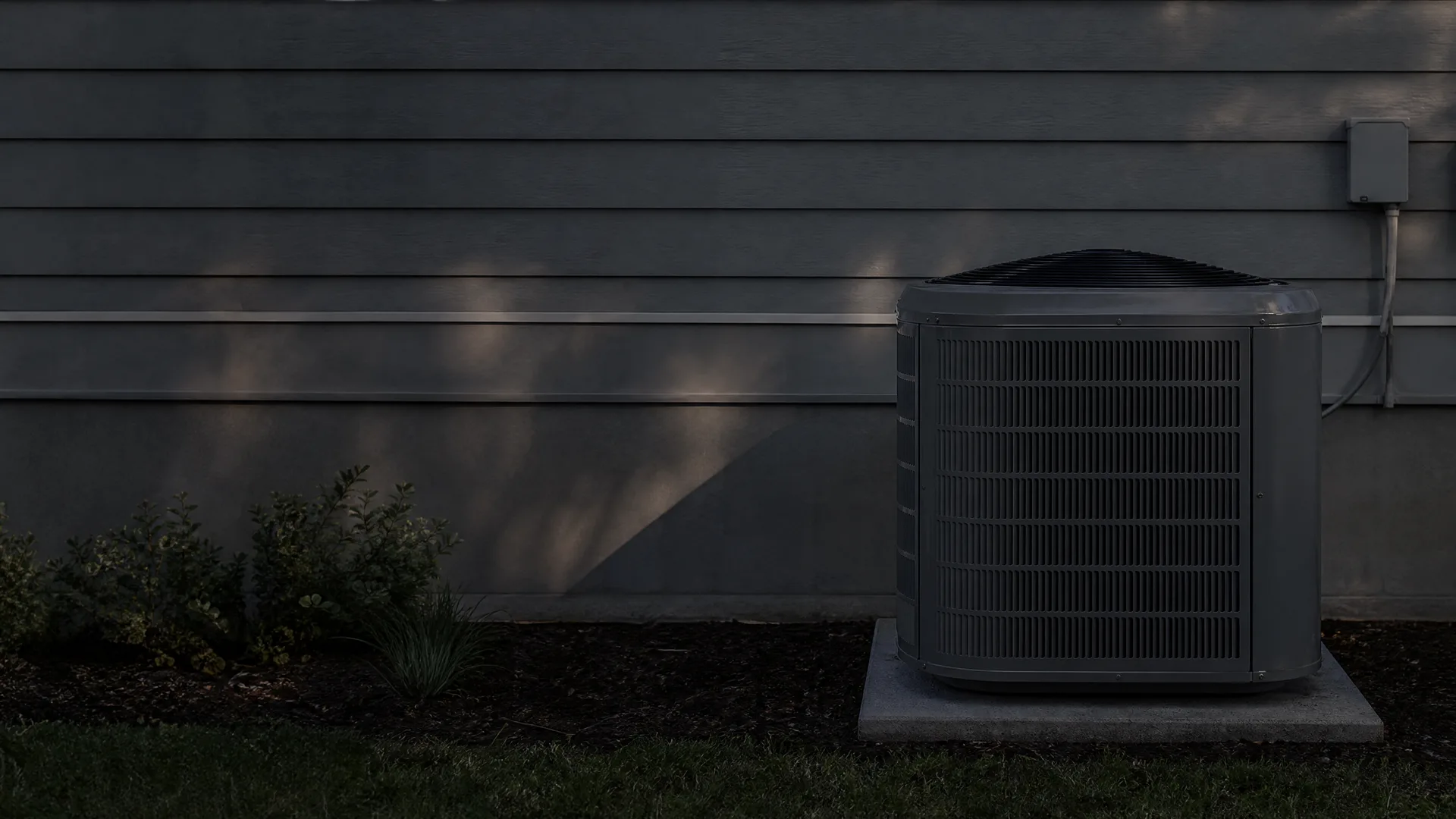
A gray outdoor air conditioner condenser unit on a concrete pad beside a house with horizontal siding and a stucco foundation, with a disconnect box and conduit on the wall, decorative gravel, mulch, and a shrub nearby.

Running normally

Air moves out of the vents cold, the coil stays dry, and the condenser outside hums along with clean metal fins you can see through. No ice anywhere on the lines or the cabinet. This is what should be happening on a July afternoon in Leavenworth.


An outdoor air conditioning condenser unit on a concrete pad beside a house with horizontal lap siding, with an electrical disconnect box and conduit on the wall, mulch and a green shrub to the right, and a concrete walkway in the foreground.

Frozen and struggling

Ice coats the coil or the copper lines, airflow from the vents turns weak or warm, and the outdoor unit's fins are caked with dirt and debris. The coil grille can't pull air through like it needs to, and the whole system is working against itself.

Is this why the house isn't cooling down

You've probably noticed the air from the vents has gone warm or weak, even with the thermostat set low. There might be a hissing or bubbling sound near the indoor unit, or water pooling on the floor nearby as the ice melts between cycles. Some homeowners catch a musty smell once the coil thaws out. None of this fixes itself by running the system harder. Left alone through a hot stretch, a frozen coil can push the compressor to keep working against a blocked system, and that's the part that costs the most to replace.

A smiling bearded man in a dark green henley shirt sits on a blue-gray couch in a living room, with a bowl of popcorn in the foreground and a houseplant and window behind him.
A smiling man in a dark sweatshirt reclines on a gray sofa in a living room, with a wooden bowl of popcorn on a table in the foreground and a dining area, shelving, and pendant lamp behind him.
A smiling man in a navy long-sleeve shirt reclines on a sofa in a living room, with a bowl of popcorn on a wooden coffee table and framed pictures on the wall behind him.
A smiling man in a dark green long-sleeved shirt sits on a gray sofa in a living room, with a bowl of popcorn in the foreground and windows and a potted plant behind him.

The right pro for this job

A frozen coil doesn't fix itself by shutting the system off for an hour. The ice has to melt completely, and whatever caused it, low refrigerant, a dirty filter blocking airflow, a failing blower motor, is still there once it does. Run the AC again with ice still in the lines and you risk the compressor, which costs far more than the repair itself. Leavenworth summers don't let up, and a house that can't cool itself through August humidity gets uncomfortable fast, especially with kids or anyone older at home. Figuring out which of those causes applies to your unit means someone looking at the coil, the refrigerant pressure, and the airflow in person. That's a job for a licensed contractor, not a guess from across town. Send the request and the search for someone qualified is off your plate. You can get back to keeping the house livable while someone who does this for a living sorts out why the ice formed in the first place.

Why airflow matters more than people think

The coil has to stay above freezing to shed the heat it pulls from the air, and it depends on a steady flow of warm house air moving across it to do that. A dirty filter, a closed vent, or a blower that's lost speed all cut that flow down. Once airflow drops low enough, the coil's surface temperature falls below 32 degrees and the moisture in the air freezes onto it instead of draining off as condensate. From there it builds on itself. Ice is a poor conductor, so each layer insulates the coil further and makes it colder still, even as the compressor keeps running.

What low refrigerant does to the same coil

Refrigerant has to be at the right pressure to absorb heat at the rate the coil is designed for. When a system has lost refrigerant through a leak, the pressure inside the coil drops, and so does its temperature, often well below freezing even with normal airflow across it. This is why a frozen coil can show up with the filter clean and every vent open. A contractor can check pressures with gauges and find out whether the charge is low, something a homeowner can't do without the equipment. Refrigerant doesn't get used up, so low charge almost always points to a leak somewhere in the lines.

An outdoor air conditioner condenser unit on a concrete pad beside a house with light horizontal vinyl siding, surrounded by bare dirt, gravel and dry leaves, with refrigerant lines and conduit running along the wall.
Before you get your air conditioner repair
A gray outdoor air conditioner condenser unit on a concrete pad beside a house with horizontal lap siding, with a flowering shrub at left and a disconnect box with conduit on the wall at right.
After you get your air conditioner repair

Keep running it and hope the ice melts on its own

Shut it off at the thermostat, switch the fan to on, and let the coil thaw fully before anyone touches it again. That can take a few hours, and running it iced up only strains the compressor further.

Cooling runs May through September

Five months of cooling a year means your AC here works hard from May through September, with little break once the heat sets in. A coil that freezes in July has months of hard running still ahead of it, and whatever caused the ice, low airflow or low refrigerant, will keep causing it until it's fixed.

NOAA nClimDiv 1991-2020

A frozen coil is airflow or refrigerant, almost always one of the two, and the ice is just where the problem shows up. Shutting the unit off and letting it thaw buys time, nothing more. Whatever blocked the airflow or let the charge run low is still sitting there once the coil is dry again. With five months of Leavenworth summer still ahead, that's not something to leave alone and hope it holds. A contractor can find which of the two it is and fix that part instead of guessing. Send the form and the search for someone is done. You won't be calling around or waiting on hold. A contractor who handles this in Leavenworth County gets your information and reaches out, and from there it's off your plate. The house gets cold air again, and the next time the coil ices up, if it ever does, you'll already know who to call.

An outdoor air conditioning condenser unit sits on a concrete pad beside a gray horizontal lap-sided house wall, with a small electrical box and conduit above and shrubs in a mulch bed to the left.

Matched to your air conditioner job

Once you send the form, finding a pro is off your list.

Step 1 of 3: Equipment