

Running clean
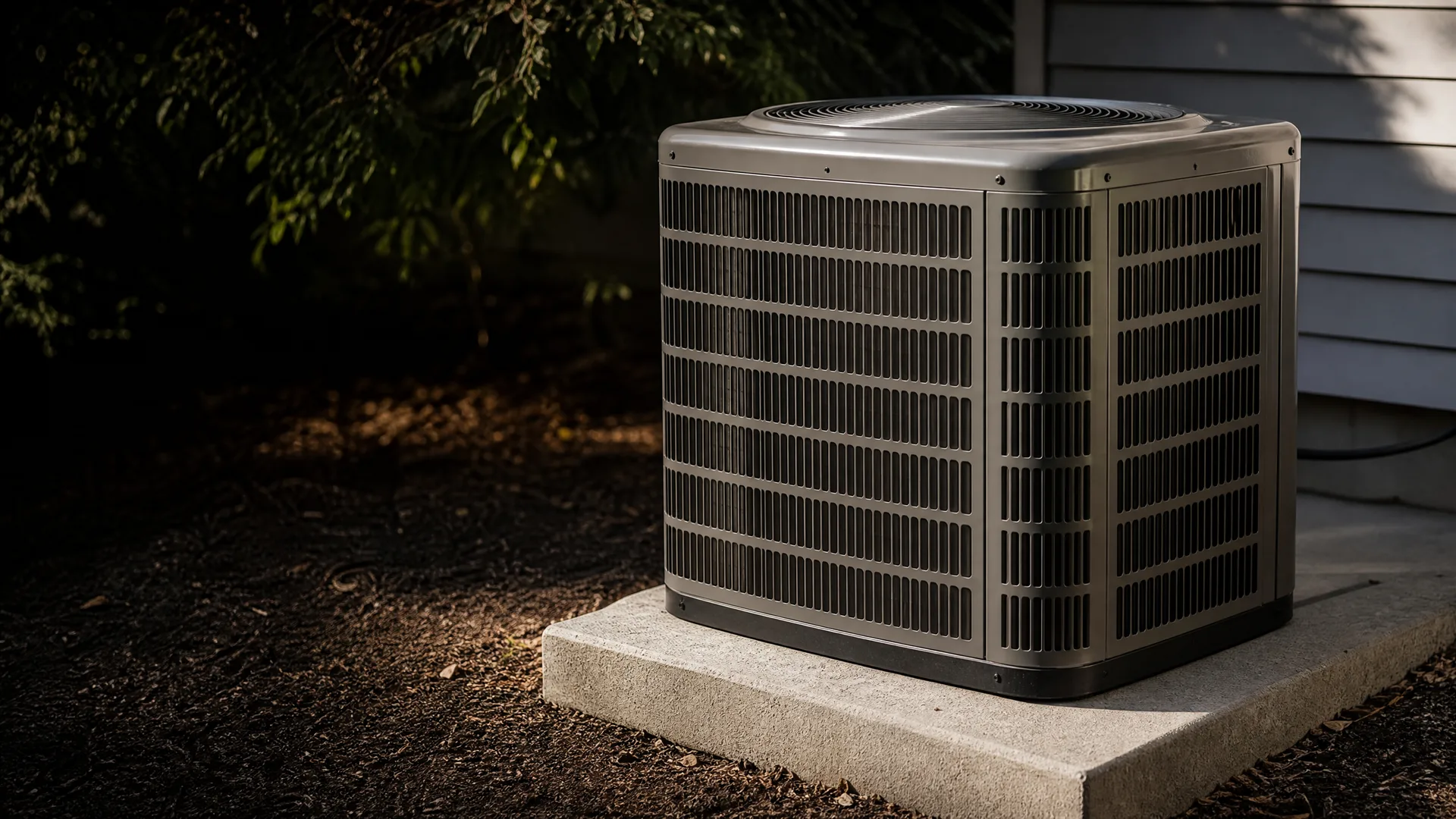
This is what a healthy condenser looks like outside your house. The fins are clear, the coil underneath is clean, and the unit cycles on and off without any smell reaching your vents past that first startup minute.
Get matched with a pro who fixes air conditioners in Butler County.
Get an air conditioner proA burning smell from your air conditioner usually means dust burning off the coil the first time it runs after sitting idle, and that clears up in a few minutes. If it doesn't clear up, or it smells sharper, like hot plastic or wiring, that's different. The blower motor can overheat when a bearing fails, or a wire can chafe where it rubs against the cabinet, and either one can get hot enough to smell before anything smokes. A capacitor that's failing can also run hot and give off that acrid smell right before it gives out. Any of these can run all summer here in Butler County before they fail outright, which is exactly why the smell is worth paying attention to now instead of waiting. If the smell is electrical and not just dust, shut the system off at the thermostat or the breaker until it's looked at. Running it again risks the wiring behind that smell, not just the air conditioner itself.




A few minutes of dusty smell from a vent, then nothing more, is the harmless kind. What's different is a smell that keeps up the whole time the AC runs, or changes to something sharp and plastic-like, or shows up with a burning smell near the outdoor unit, a tripped breaker, or the system blowing warm air. That points to a wire, a motor, or the compressor itself, and running the unit longer doesn't help it, it adds risk. If you smell smoke or see any, or the smell comes with sparking or scorch marks at the outdoor unit or the indoor air handler, turn the system off at the thermostat and the breaker until someone looks at it.
Dust on the coil and ducts scorches off when the AC first kicks on.
A failing blower motor bearing or capacitor overheats and gives off a hot, burning odor.
Electrical insulation on a wire or connection melts, releasing a sharp, plastic-like smell.
A contractor opens the unit, traces the odor to its source, and replaces the failed part.

This is what a healthy condenser looks like outside your house. The fins are clear, the coil underneath is clean, and the unit cycles on and off without any smell reaching your vents past that first startup minute.

Years of dirt packed into the fins and casing trap heat against the coil and the motor inside. A unit left like this is more likely to be the one you smell burning, not just dust, when it struggles to shed that heat.
Why does my AC smell like it's burning when it first turns on?
That smell is dust settling on the coil and in the ducts while the system sits idle, then scorching off the moment it fires back up. It happens most after the unit has been off for a stretch, which in Butler County means the first warm stretch in spring or any time the AC has been off for days. The smell should fade within a few minutes as the dust burns away and doesn't come back the rest of the time the system runs. If it lingers past that, gets stronger instead of weaker, or returns every time the AC cycles on, something other than dust is causing it.



Butler County summers run with a dew point around 65°F on average through June, July and August, which is the sticky, heavy kind of air that doesn't let up at night. Your AC runs longer stretches to wring that moisture out, and a motor or capacitor that's already weak has less time to cool down between cycles. That's often when a burning smell stops being a one-time thing at startup and starts showing up again a few hours into a run. If that's what you're noticing, sending in your information gets a contractor who knows this kind of summer looking at it, and you're done chasing down who to call.
NASA POWER T2MDEW
One request and the search for a pro is handled.
You only hire the pro if you want to.
Butler County summers keep the AC working for hours at a stretch instead of cycling on and off. A motor or capacitor that is starting to fail can run fine for a short cycle but heat up and give off that burning smell once it has to work for an hour or more without a break. That is why the smell sometimes shows up partway through a hot afternoon and not when the unit first starts. A system that only runs short bursts might hide a weak part for a while longer. One that runs most of the day through a Kansas summer will find it faster.
A contractor checking a burning smell that does not clear up will look at the blower motor bearings, the capacitor, and the wiring at the disconnect box outside before anything else. Those are the parts that generate heat when they are failing, and heat is what you are smelling. None of them are visible from inside the house, and the condenser fins outside can look clean while the problem sits on a part behind them. Telling a contractor when the smell started and whether it comes and goes with how long the unit has been running gives them a head start before they ever open the cabinet.


If the burning smell is sharp, like hot plastic, or you see any smoke or sparking at the vents or the outside unit, turn the AC off at the thermostat and leave it off. A wire or connection that's melting won't fix itself by running longer, and it can damage the blower motor or trip the breaker repeatedly. Leave it off until a contractor has looked at it. Going without AC for a day in Butler County summer heat is uncomfortable, but it's safer than letting a wiring problem keep running.
If the smell was dust burning off when the system first kicked on and it cleared up within a few minutes, there's no reason to shut anything down. Run it the rest of the day as usual. Keep paying attention the next few times it cycles on, especially during a long Butler County summer stretch when the AC runs for hours without a break. If the smell comes back after that first run, or changes to something sharper, that's when it's worth getting someone out to check the blower motor or capacitor before it fails outright.


The smell fades on its own and the air coming through the vents is clear. Run it through the rest of the day without worry.
The smell keeps up past startup, or it changes to something sharper. That's worth having a contractor look at before you run it again.
Five months of steady summer use adds up to a lot of startup cycles on your air conditioner. That dusty smell you get the first time it kicks on each season is normal, but a motor or capacitor straining through all those months is what turns a startup smell into one that lingers.
NOAA nClimDiv 1991-2020
A burning smell from your AC comes down to two things, and the difference is how long it lasts. Dust on the coil burns off in the first few minutes after the system sits idle, and once it clears, your air conditioner is fine for the rest of the day. A smell that doesn't clear, or turns sharp like hot plastic, means a motor, capacitor or wire is overheating. Butler County summers keep an AC running for hours at a stretch to pull the moisture out of air that stays muggy from June through August, and that kind of runtime is what turns a part that's starting to fail into one that's actually failing. A motor or capacitor can get through a short cycle without any trouble and still heat up once it's asked to run for hours straight. If what you're smelling is sharp or plastic-like, or you've seen smoke or sparking near the vents or the outside unit, turn the AC off at the thermostat and leave it off until someone's looked at it. If it was just dust and it's gone, there's nothing to shut down. Either way, the smell is worth paying attention to now, because it's a lot easier to deal with while it's still just a smell than after it's taken out a motor or a run of wiring. Once you send the form, the work of finding someone to look at it is off your plate.
A pro who works on air conditioners
