Tell us about the job
Takes about a minute. No obligation.
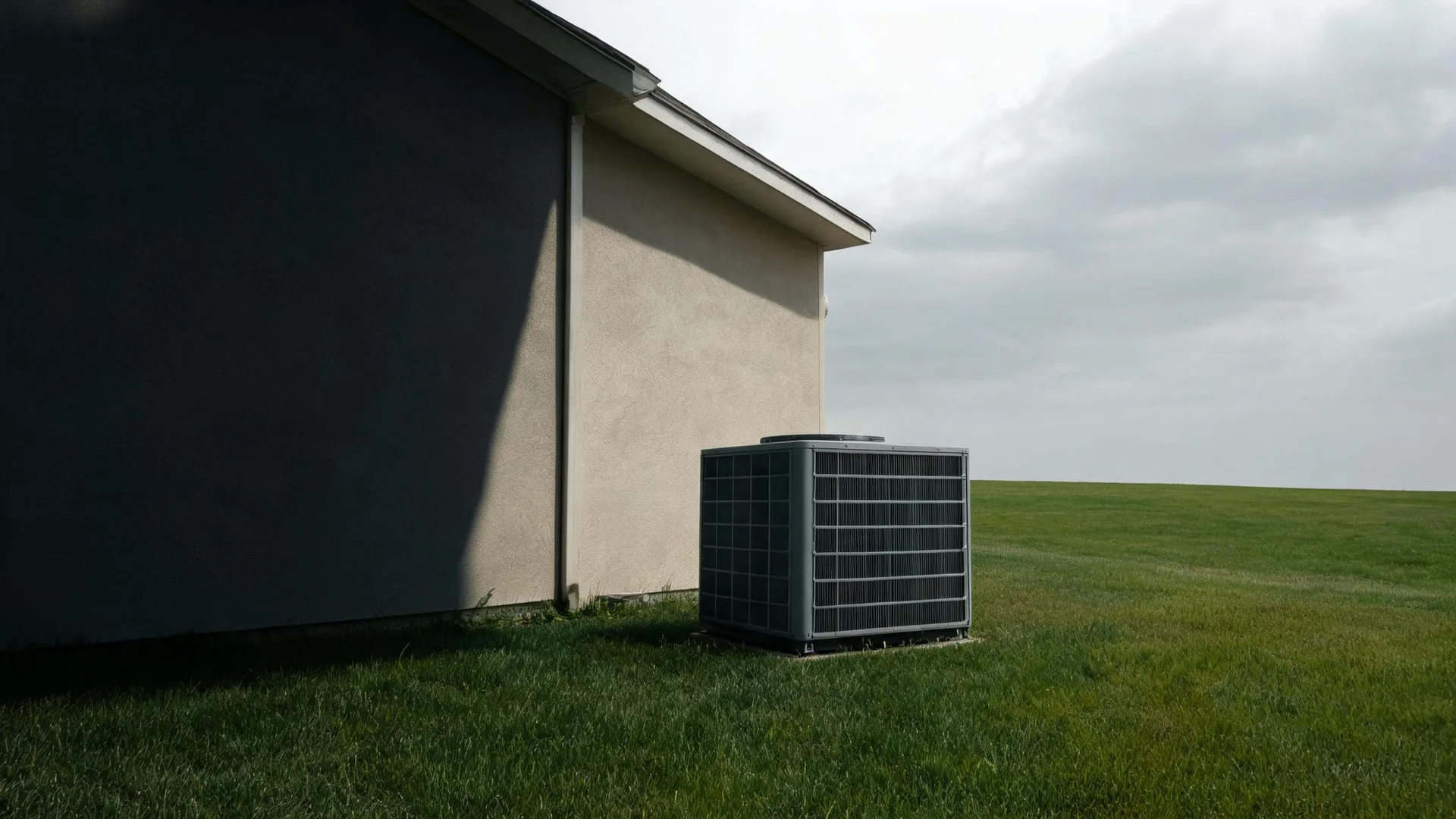
The compressor in a central AC unit starts and stops hundreds of times across a cooling season, and the contactor that triggers each start takes that punishment every cycle. Homes in Ford County, KS run cooling about four months a year, from June through September. A contractor diagnosing a repair here checks the contactor, the capacitor, and the compressor windings early, because those are the parts that accumulate wear from repeated starts across a full, unbroken summer. Refrigerant leaks and coil fouling show up too, but the electrical components that handle starting load are where the hours land.
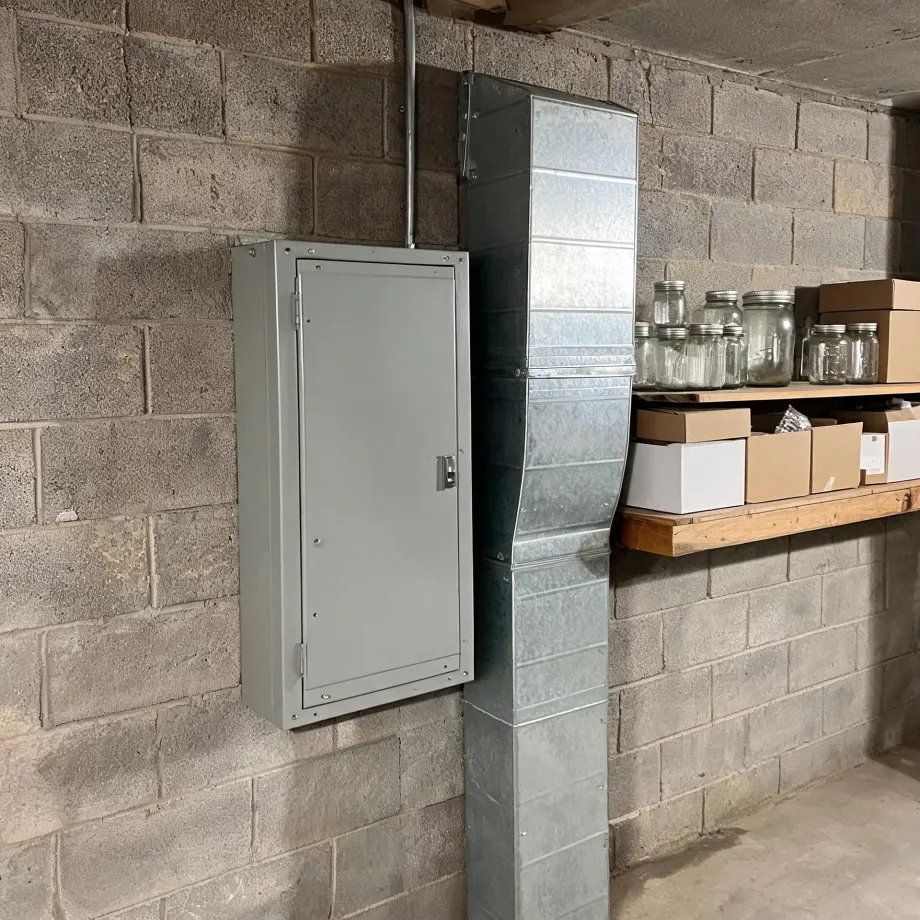
Ductwork in a house this age has its own history, and that history shapes what a repair contractor finds when the system stops cooling properly. Half the homes in Ford County, Kansas were built in 1972 or earlier (2020-2024 ACS 5-year). Runs that have been resealed, rerouted, or left alone for decades can restrict airflow enough that a refrigerant charge or a failing capacitor is not the whole story. A contractor opening the unit also checks what the air is doing before it gets there, because a system working against degraded ductwork will keep failing even after the mechanical fault is fixed.
The Parts of a Central AC a Contractor Checks First
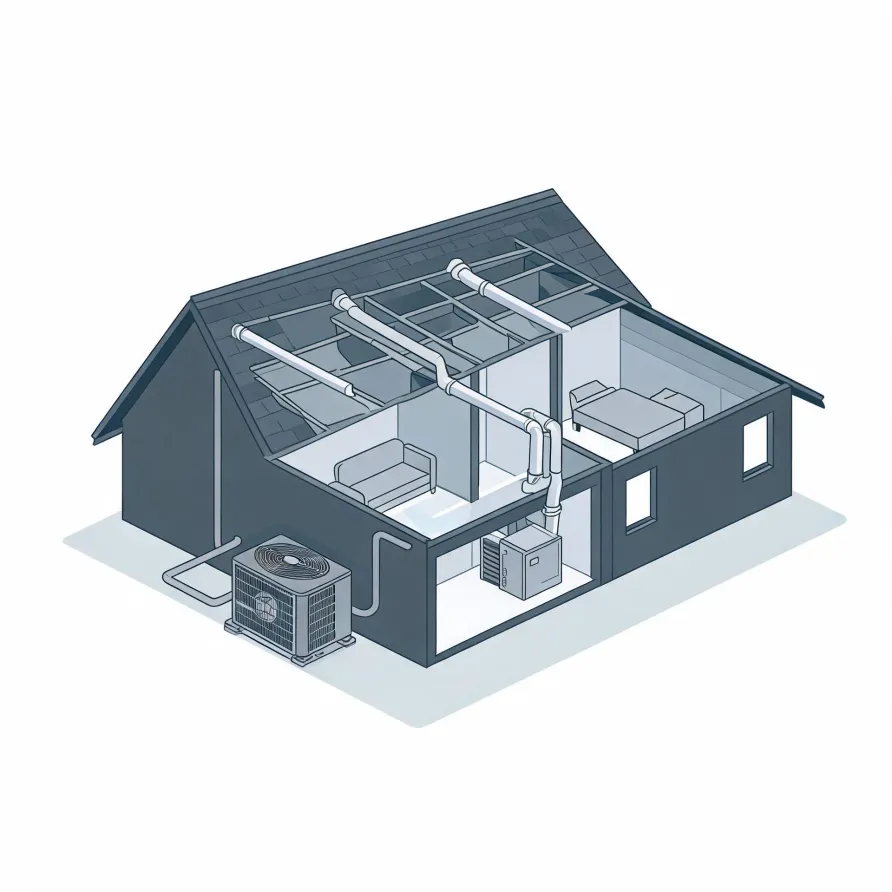
The outdoor condenser unit sits outside the house, usually on a concrete pad at ground level, and it carries the compressor and condenser coil. Those two components are where a contractor starts. A failed compressor or a fouled coil explains a wide range of symptoms, from a system that runs without cooling to one that shuts off before the house reaches temperature.
Inside, the air handler holds the evaporator coil and the blower fan, typically in a closet, attic, or utility room. The expansion valve sits close by, controlling how refrigerant enters the coil. Each of these indoor components has its own failure pattern, so a contractor works through them systematically once the outdoor unit checks out.
The drawing shows a representative layout, and a licensed contractor determines which components apply to your specific house and system.
Get matched in Ford CountyFord County, Kansas, by the numbers
484 severe weather events were recorded in Ford County, Kansas between 2015 and 2024.
NOAA National Centers for Environmental Information, Storm Events Database, bulk CSV export, events 2015-01-01 through 2024-12-31.Half the homes in Ford County, Kansas were built in 1972 or earlier (2020-2024 ACS 5-year).
U.S. Census Bureau, 2020-2024 American Community Survey 5-Year EstimatesFord County, Kansas holds 12,743 housing units (2020-2024 ACS 5-year).
U.S. Census Bureau, 2020-2024 American Community Survey 5-Year EstimatesOwners occupy 62.5% of the occupied homes in Ford County, Kansas (2020-2024 ACS 5-year).
U.S. Census Bureau, 2020-2024 American Community Survey 5-Year EstimatesCodes & Standards Covering Central AC Repair in Ford County, Kansas8 sourced rules and standards
What happens when the contractor comes out
Split-system central air conditioners rated below 45,000 Btu/h manufactured on or after January 1, 2023 must meet a federal minimum of 13.4 SEER2.
Split-system central air conditioners rated at or above 45,000 Btu/h manufactured on or after January 1, 2023 must meet a federal minimum of 13.4 SEER2.
Split-system central air conditioners manufactured between January 1, 2015 and December 31, 2022 had to meet 13 SEER, the metric that preceded SEER2.
Single-package central air conditioners manufactured on or after January 1, 2023 must meet a federal minimum of 13.4 SEER2.
Space-constrained central air conditioners manufactured on or after January 1, 2023 must meet a federal minimum of 11.7 SEER2.
Federal efficiency standards for split-system central air conditioners and heat pumps are set on each certified combination of outdoor unit and indoor coil rather than on the outdoor unit alone.
Residential and light commercial air conditioning and heat pump systems assembled in the field, including mini-splits and unitary systems, may not be installed on or after January 1, 2025 using a refrigerant with a global warming potential above 700.
A field-assembled system whose specified components were all manufactured or imported before January 1, 2025 carries no installation compliance date under the refrigerant restrictions and may still be installed.
Severe Weather Events in Ford County
Extreme weather puts real load on cooling equipment, and Ford County's climate is not gentle on systems that run hard through it. How often that stress arrives shapes how much repair work a central AC unit is likely to need over its life.
484 severe weather events, 2015–2024. Source: NOAA National Centers for Environmental Information, Storm Events Database.