

What a healthy setup looks like
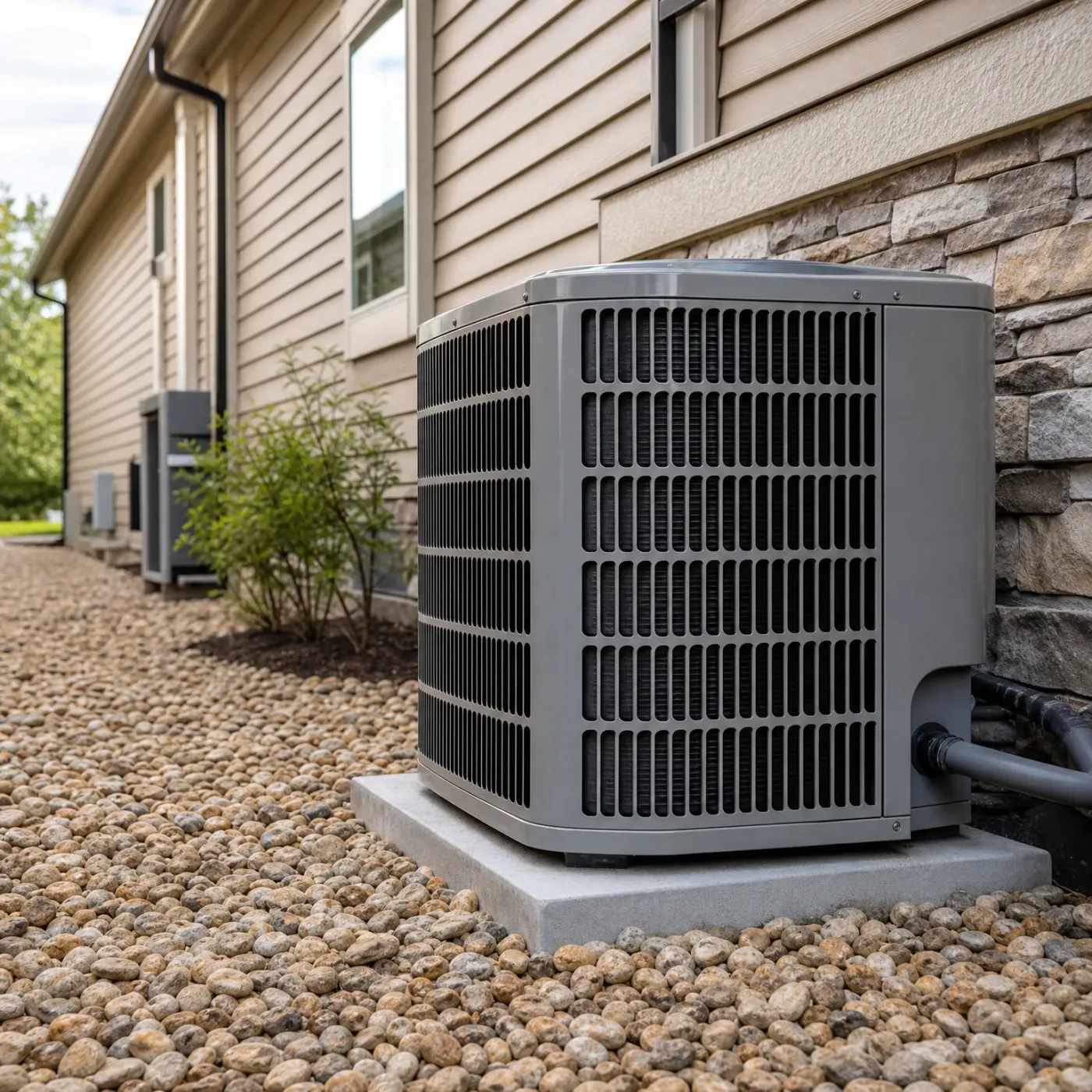
The condenser sits on its pad, lines running clean along the wall to the disconnect box. Nothing drips, nothing rusts, and the drain line inside is doing its job moving water outside where it belongs.
You walked in to find water on the floor near the vents or pooling around the indoor unit, and summer here is long enough that this isn't something you can put off until fall. You want to know what's causing it before it ruins a floor or a ceiling, and whether it's something that needs a contractor out soon.
Your AC pulls moisture out of the air and that water is supposed to run out through a drain line to the outside. Algae and dirt build up inside that line over time and block it, so the water backs up and spills out of the drain pan instead, usually near the indoor unit or wherever that line runs through your house. A cracked or rusted drain pan causes the same thing. With Lawrence summers running sticky for months, the system is pulling a lot of moisture out of the air day after day, and that steady load is exactly what clogs a drain line faster than it would somewhere drier. Left alone, the water can stain ceilings, warp flooring, and encourage mold where it collects.




Warm air passes over the evaporator coil and loses its heat.
Humidity in that air condenses into water on the cold coil.
Water drips off the coil into the drain pan below.
The drain pan feeds into a condensate line running outside.
Check the ceiling below the attic unit if that's where your system sits, and check the closet floor or basement floor if it sits there. Water stains on drywall, a soft spot in the ceiling, or a musty smell in that closet all mean this has been going on longer than today. The carpet or subfloor near the indoor unit may already feel damp even after you wipe up what you can see. Mold can start in wet drywall or soaked carpet padding within a day or two, and once it's in the wall or under the flooring you can't just wipe it away. A pan that keeps overflowing can also trip the float switch and shut the whole system off, which is why some people notice the leak only after the air stops blowing cold.




Describe what your air conditioner is doing once, in one form.
Get matched with a pro who works on air conditioners in Douglas County.
It costs nothing to send, and you don't have to hire anyone.

A clogged drain line doesn't fix itself. Every hour the system keeps running, it keeps pulling moisture off that coil and sending it into the pan, and once the pan is full it has nowhere to go but onto your floor or down into your ceiling drywall. If the unit sits in a closet or upstairs utility space, that water finds the subfloor next, and subfloor that stays wet starts to warp and smell before you ever see a stain come through below it.
You don't have to figure out whether this is the drain line, the pan, or something else before you get someone out to look at it. A contractor who works on systems like yours in Lawrence can tell what's backed up and what it's touching once they're standing in front of it. Getting matched with one means you skip calling around town explaining the same leak three or four times and instead have someone reach out who already knows what you're dealing with.


The condenser sits on its pad, lines running clean along the wall to the disconnect box. Nothing drips, nothing rusts, and the drain line inside is doing its job moving water outside where it belongs.

This unit shows its years, weathered where it sits against the foundation. A cabinet and lines in this shape are worth a look, since a drain pan that's rusted through won't hold water back anymore, it'll just pass it along to your floor.


Lawrence summers stay muggy for weeks at a stretch, and that humidity is exactly what your AC is pulling out of the air and turning into water on the coil. The wetter the air outside, the more water drips off that coil and into the drain pan, and the more water that line has to carry away. A system working through a dry stretch might never show you a clogged line at all. The same system working through a humid August can fill that pan fast enough that a partial clog turns into an overflow in a day instead of a week. That's why this shows up more in July and August than it does in April.
A clogged line is the usual cause, but the drain pan underneath your indoor unit can also be the source. Pans are metal or plastic, and either one can crack or rust through with age. Once that happens, water leaks straight through the bottom of the pan instead of running down the line at all, so clearing the line won't stop it. The way to tell them apart is where the water shows up. Water at the drain line's exit outside points to a clog. Water directly under the indoor unit with the outside line staying dry points to the pan itself.
Five months of cooling means five months where that drain line has to keep moving water without a break. A clog that would barely matter over a few warm weeks has all summer to build up and back the water into your house instead of outside where it belongs.
NOAA nClimDiv 1991-2020
Water inside your house almost always means the drain line or the pan isn't moving water outside the way it should, and that's a repair job, not something to mop up and ignore. Left alone it keeps finding new places to show up: a stain on the ceiling, a soft spot in the floor, a smell that doesn't go away. You don't need to figure out whether it's the line, the pan or the pump before you call someone. What you need is a contractor who can look at your system and tell you which one it is. Instead of searching through a list of HVAC companies, calling a few, explaining the same leak over and over, and weighing quotes against each other, you can get matched with a contractor who handles this kind of repair and have them reach out to you directly. That's one less thing to manage while you're already dealing with water where it doesn't belong.





Skip calling shops to ask who repairs air conditioners in Douglas County.
No charge to send it. You decide if you hire them.