Tell us about the job
Takes about a minute. No obligation.
Sizing a central AC system for this county starts with what the compressor is actually being asked to carry each year. Homes in Osage County, KS run cooling about four months a year, from June through September. A unit that is undersized for the house runs longer cycles through those months, and the contactor and condenser fan accumulate wear faster than the nameplate ever assumed. A contractor has to run a proper load calculation before quoting, because an install that looks acceptable in a mild spring will fall short by July and stay short through September.
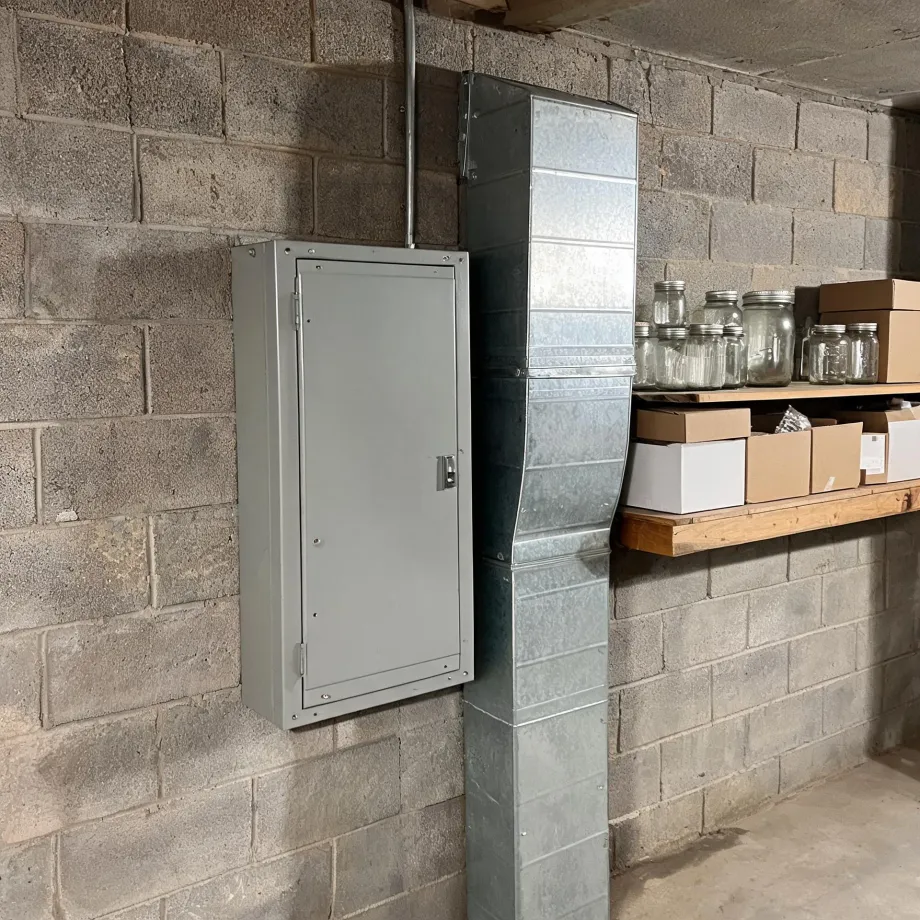
Ductwork laid out for whatever system a house originally held does not always carry what a new central AC unit needs, and in Osage County that gap between the original design and today's equipment is where most installation decisions get made. Half the homes in Osage County, Kansas were built in 1974 or earlier (2020-2024 ACS 5-year). A contractor sizing and routing for a new system has to work out whether the existing runs will move the volume of air the new unit requires, and where they will not, what gets added or rerouted. The electrical service gets the same look: what the panel was built to supply and what a modern unit draws are two separate questions with answers a contractor reads from the house itself.
What a Central AC Installation Covers
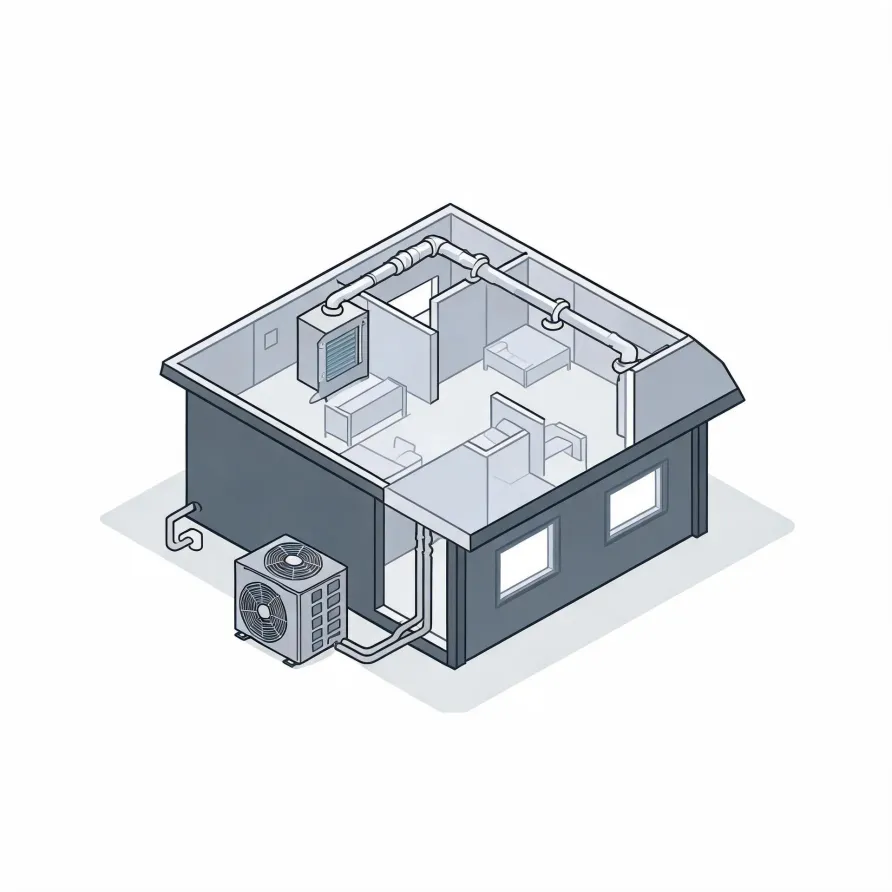
The outdoor condenser unit sits on a pad beside the house and holds the compressor and the condenser coil, the two components that shed heat outside. Inside, the air handler or furnace-mounted evaporator coil sits in a closet, utility room, or attic and is the piece the cooled air actually passes through before it moves into the home.
The refrigerant lines run between the outdoor and indoor units, and a licensed contractor connects and pressurizes them as part of the installation. A thermostat mounts on an interior wall and gives the homeowner control over when the system runs and what temperature it holds.
The drawing shows the typical layout of these components, and a licensed contractor determines exactly how they come together in your home.
Find a contractor in Osage CountyOsage County, Kansas, by the numbers
157 severe weather events were recorded in Osage County, Kansas between 2015 and 2024.
NOAA National Centers for Environmental Information, Storm Events Database, bulk CSV export, events 2015-01-01 through 2024-12-31.Half the homes in Osage County, Kansas were built in 1974 or earlier (2020-2024 ACS 5-year).
U.S. Census Bureau, 2020-2024 American Community Survey 5-Year EstimatesOsage County, Kansas holds 7,337 housing units (2020-2024 ACS 5-year).
U.S. Census Bureau, 2020-2024 American Community Survey 5-Year EstimatesOwners occupy 82.4% of the occupied homes in Osage County, Kansas (2020-2024 ACS 5-year).
U.S. Census Bureau, 2020-2024 American Community Survey 5-Year EstimatesCodes & Standards Governing Central AC Installation in Osage County, Kansas8 sourced rules and standards
What the installation looks like from your side
Split-system central air conditioners rated below 45,000 Btu/h manufactured on or after January 1, 2023 must meet a federal minimum of 13.4 SEER2.
Split-system central air conditioners rated at or above 45,000 Btu/h manufactured on or after January 1, 2023 must meet a federal minimum of 13.4 SEER2.
Split-system central air conditioners manufactured between January 1, 2015 and December 31, 2022 had to meet 13 SEER, the metric that preceded SEER2.
Single-package central air conditioners manufactured on or after January 1, 2023 must meet a federal minimum of 13.4 SEER2.
Space-constrained central air conditioners manufactured on or after January 1, 2023 must meet a federal minimum of 11.7 SEER2.
Federal efficiency standards for split-system central air conditioners and heat pumps are set on each certified combination of outdoor unit and indoor coil rather than on the outdoor unit alone.
Residential and light commercial air conditioning and heat pump systems assembled in the field, including mini-splits and unitary systems, may not be installed on or after January 1, 2025 using a refrigerant with a global warming potential above 700.
A field-assembled system whose specified components were all manufactured or imported before January 1, 2025 carries no installation compliance date under the refrigerant restrictions and may still be installed.
Severe Weather in Osage County
Weather events place real demands on cooling equipment, from sustained heat loads to power swings that stress components over time. How hard a system has to work in Osage County is a local question, and the installation choices a contractor makes should reflect local conditions.
157 severe weather events, 2015–2024. Source: NOAA National Centers for Environmental Information, Storm Events Database.