





AC can't keep up on hot days in Leavenworth, KS

Step 1 of 3: Equipment

When your AC runs nonstop on a hot Leavenworth afternoon and the house still won't cool past 78 or so, the unit is likely undersized for the load it's fighting or losing capacity it used to have. Summers here run long and sticky, July and August especially, and a system that keeps up fine in June can fall behind once the humidity sets in day after day. The common causes are a refrigerant charge that's dropped from a slow leak, a condenser coil caked with dirt so it can't shed heat, or a compressor that's wearing out and no longer moving enough refrigerant to match the heat coming in. Blocked airflow from a dirty filter or closed vents makes any of those worse. None of these get better by waiting through another heat wave. A licensed technician can measure the charge, check the coil, and test the compressor to find which one is behind it, and fix the one that's actually failing instead of guessing.

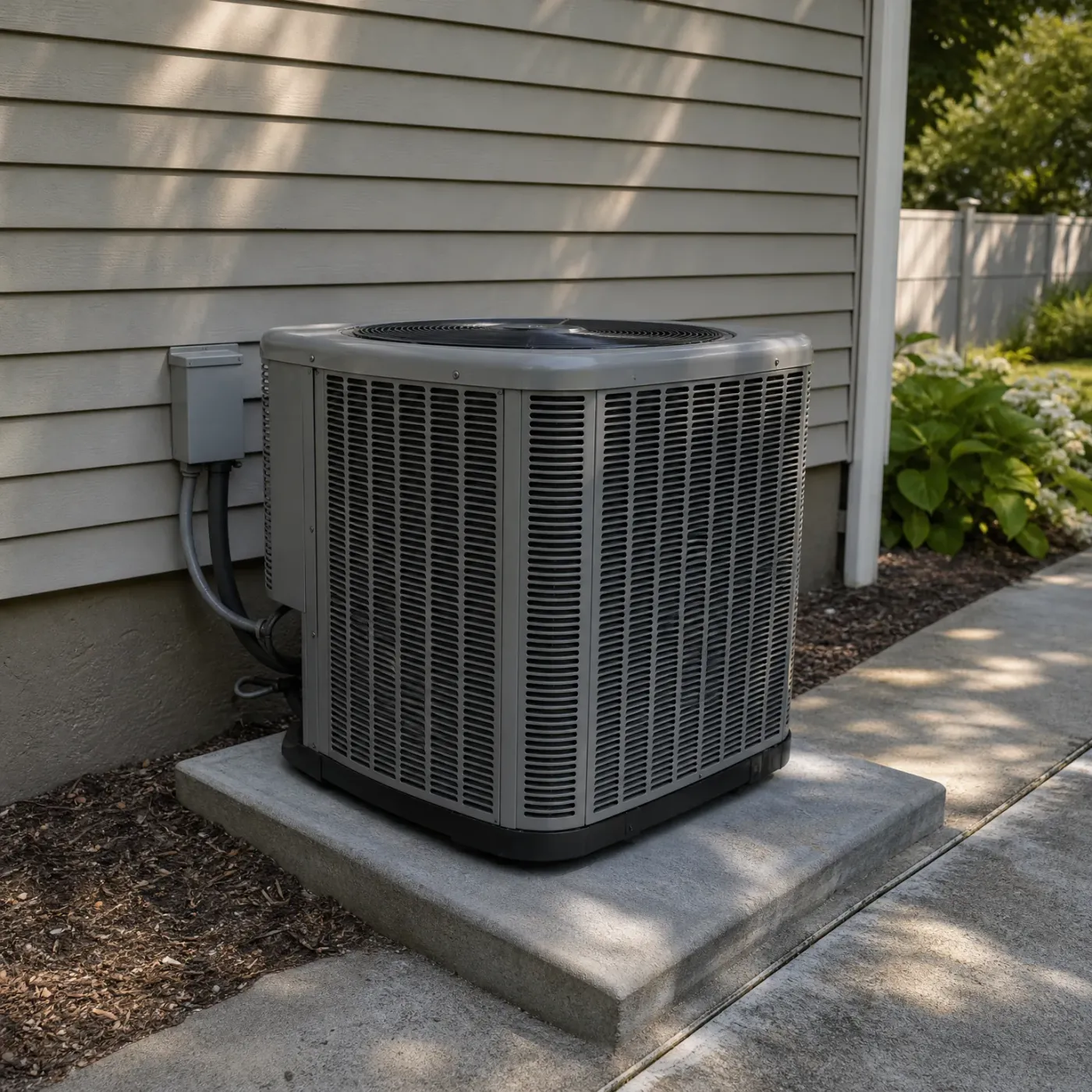
A gray outdoor air conditioner condenser unit sits on a concrete pad beside a house, with a gray electrical disconnect box and conduit on the lap-siding wall above it and a green shrub and pine straw at the lower left.

Why the heat index matters

Leavenworth summers carry heavy humidity, and your AC has to pull that moisture out of the air before the house feels cool. A unit that's low on refrigerant or undersized for the square footage can run for hours and only knock the temperature down a few degrees, because most of its work is wasted fighting moisture instead of heat. That's why the thermostat can read 78 even as the system runs nonstop.

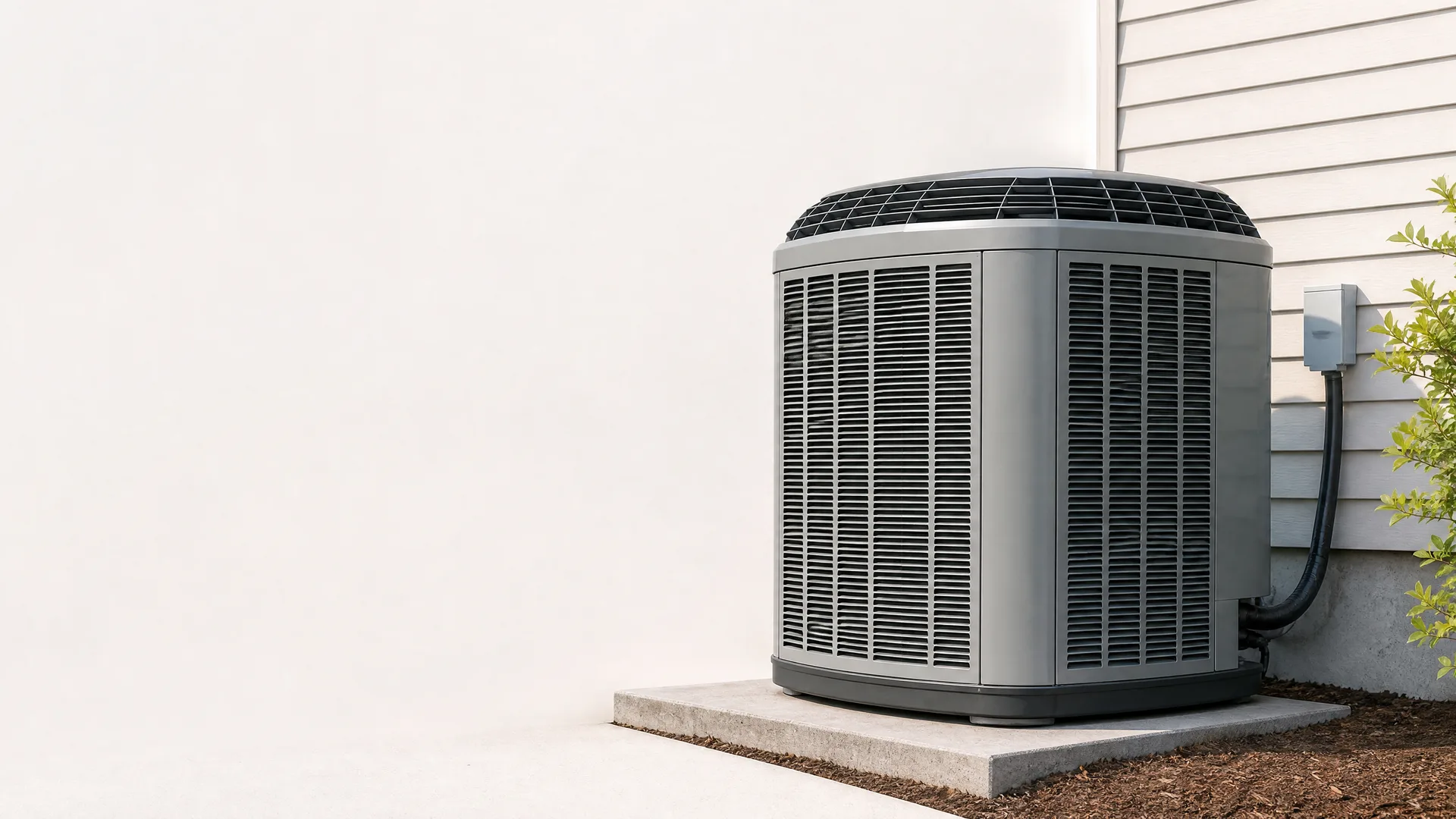
A gray outdoor air conditioner condenser unit on a concrete pad beside a light-colored stucco wall and horizontal lap siding, with an electrical disconnect box, conduit, mulch, and a shrub at right.

What a contractor checks first

Someone who services AC units in Leavenworth County every summer knows the usual suspects on a 95-degree day: refrigerant charge, the condenser coil caked with cottonwood fluff or mowed grass, and a blower that's moving less air than the system was built for. Clearing those takes a gauge set and a coil brush, not a guess, and it tells you fast whether the unit is failing or just outmatched.

Why does the house still feel sticky and warm

You'll notice the air coming out of the vents feels cool to the hand but the rooms never catch up. The thermostat might read 76 while it feels more like 80. Upstairs bedrooms stay warmer than the rest of the house, and the air feels heavy even when the unit's been running for hours. You might hear it cycling on and off more than it used to, or not shutting off at all during the afternoon. A unit that strains this way all summer wears down its compressor faster, and a system that can't pull the humidity out leaves wood floors, window frames and anything else in the house sitting in damp air for months at a time.

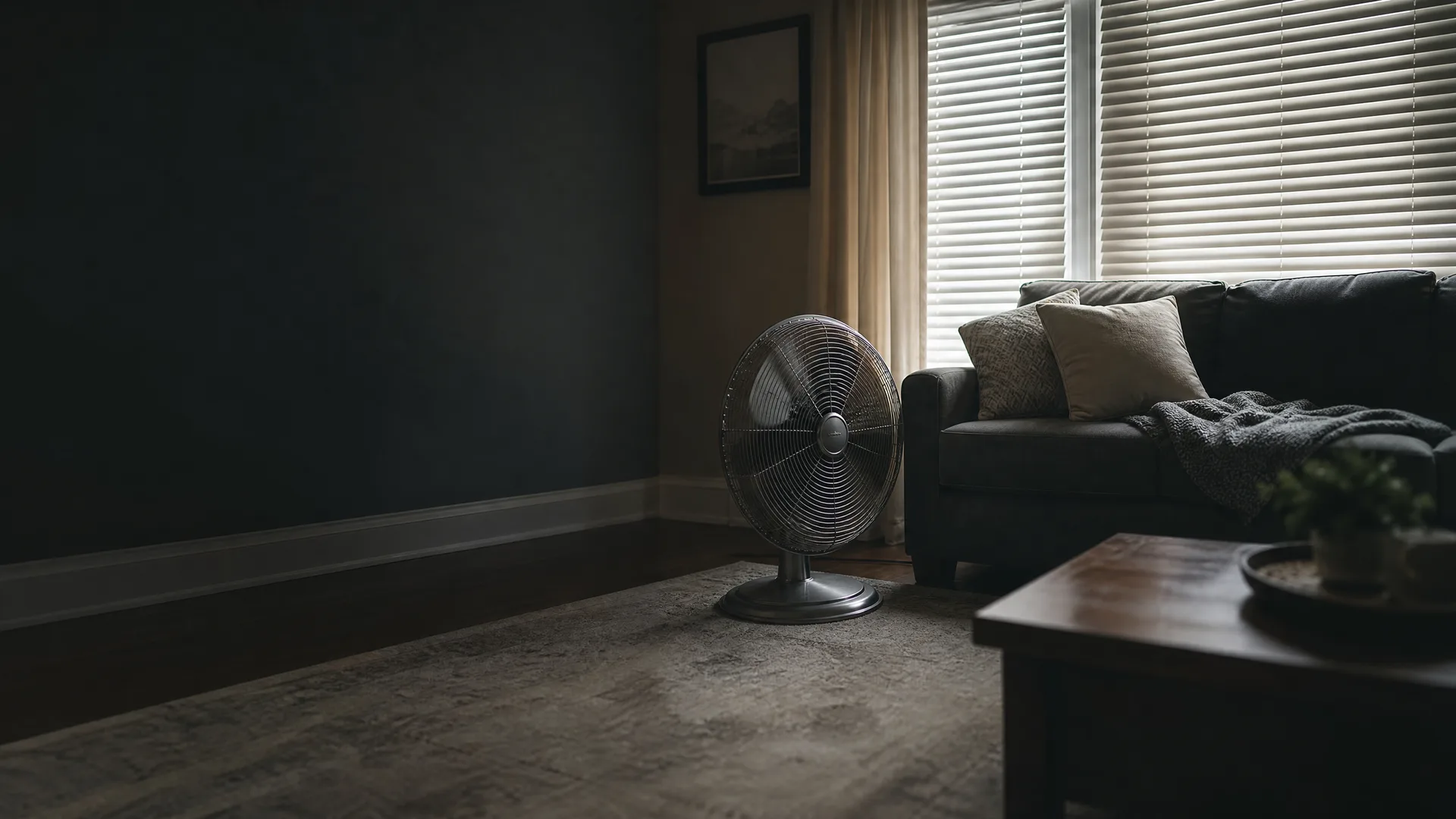
A dimly lit living room with a table fan on a patterned rug, a dark sofa with cushions and a blanket beside blinded windows, a framed picture on the wall, and a wooden coffee table with a potted plant in the foreground.

By three in the afternoon the blinds stay shut, every one of them, because the sun coming through the west windows makes the living room hotter than the thermostat already says it is. The floor fan runs next to the couch, turned toward whoever's sitting there, pushing the same warm air around instead of cooling it. The vents are blowing, you can feel that if you hold a hand up to one, but the room hasn't moved off 80 in an hour. Outside it's the kind of July heat Leavenworth County gets used to by August, thick enough that the air conditioner running straight through since noon hasn't made a dent. You turn the fan a few degrees, settle back, and wait for evening.

Ride It Out or Get It Checked

Keep running it as-is

  • You wait out the worst of it and hope for a stretch of milder days to give the system a break.
  • The compressor keeps cycling under a load it can't fully handle, which wears on it faster than normal operation would.
  • Rooms farthest from the thermostat, often upstairs, stay a few degrees warmer no matter how long the unit runs.
  • Your power bill reflects all those extra run hours without the house actually getting more comfortable.
  • If the unit is low on refrigerant or has a failing part, the strain usually gets worse as the summer goes on, not better.

Have it looked at

  • A licensed technician who works on this equipment all summer can check refrigerant charge, airflow, and whether the unit is sized right for your house.
  • You find out whether this is a repair, like a low charge or a weak capacitor, or a sign the system is simply outmatched by your square footage.
  • One visit replaces the work of calling around to several companies and explaining the same problem each time.
  • Because the contractor is local, they've likely already seen this exact complaint in other Leavenworth County homes this summer.
  • You get a straight answer on what's actually wrong instead of guessing room by room which fix might help.
A middle-aged man with grey hair and a beard, wearing a grey knit sweater, sits on a light sofa in a sunlit living room with a houseplant, wooden cabinet and framed landscape picture behind him.
A man with greying hair and a beard in an olive sweater sits on a sofa in a living room, looking to his left, with an armchair, round side table and large glass doors onto trees behind him.
A gray-haired bearded man in a dark blue shirt over a white t-shirt sits on a leather sofa in a living room with built-in shelves, a floor lamp, an armchair and large windows, looking off to the side.
A man with gray-brown hair and stubble in a dark sweater sits on a light-colored sofa in a living room, looking off to the side, with a houseplant, framed picture, shelving and a sunlit window behind him.

No calling every shop in Leavenworth County

By the time you've shut every blind on the west side and the living room still won't cool, most people start trying to figure out who to call. That usually means searching around, calling two or three companies, explaining the same thing about the upstairs bedrooms and the 76 that feels like 80 to each one, then waiting on quotes to compare. This sends the request to one licensed contractor who works in the Leavenworth area and sees this exact problem every summer, units losing capacity or running undersized against the humidity here. You get one call back, not five, from someone who already knows what tends to fail on a system like yours. No sitting out another sticky afternoon trying to figure out where to start.

Call for repair now

A contractor who works on these systems every summer can usually tell you fast whether it's a refrigerant leak, a failing capacitor, or a unit that was undersized when it went in. If it's fixable, you get it fixed before the next stretch of 95-degree days instead of after. If the problem turns out to be bigger, like a compressor on its way out, you hear that now, while you still have options, rather than mid-August when the whole system quits.


Wait and see how it goes

Some people ride it out, especially if the house is only uncomfortable a few hours a day and the worst heat feels like it's behind you. The risk is that a system already struggling in July doesn't tend to improve on its own, and whatever's wearing on the compressor keeps wearing on it. By the time it fails outright, you're often looking at the same repair, just unplanned, in worse heat, with less choice about who shows up and when.

A woman with shoulder-length graying brown hair in a cream knit cardigan sits in a dark armchair indoors, looking off to the side with a slight smile, with a shelf, window and houseplant blurred behind her.
A woman and a child wrapped together in a thick knitted beige blanket on a sofa, both with eyes closed, beside a lit table lamp in a dim room.
A gray outdoor air conditioner condenser unit on a concrete pad beside a house with dark horizontal siding and a stone base, surrounded by gravel, with a flowering shrub at left and a concrete walkway in front.

Running the way it should

A clean, properly sized condenser like this one has clear space around it and fins free of dirt, so it can shed the heat it's pulling out of the house. The disconnect box lets a contractor cut power safely for any repair.

An outdoor air conditioner condenser unit sits on a concrete pad beside a stucco wall, with refrigerant lines and conduit running to the wall and a shrub to the left.

Running but losing the fight

Grime packed into the fins blocks airflow across the coil, so the unit works harder to move the same heat. On an old condenser like this, that buildup paired with worn-out parts is often why the house won't cool past the upper 70s.

Cooling runs May through September

Five months is most of the year your AC carries real weight, not just a few hot weeks. That's five months for a weak capacitor or a low charge to turn into a system that runs all afternoon and still can't hold the house at 78.

NOAA nClimDiv 1991-2020

A gray outdoor air conditioner condenser unit on a concrete pad beside a house with horizontal lap siding, with a wall-mounted disconnect box and conduit, mulch bed, shrub, and lawn nearby.
A system like this one has nothing hiding. The pad is clear, the lines run clean to the disconnect, and the fins are open to the air so the unit can actually shed heat.
An outdoor air conditioner condenser unit sits on a gray pad beside a light vinyl-sided wall, on a concrete slab next to a gravel bed.
This one looks fine from across the yard, but conduit and lines running to a unit that's struggling will show the strain in the power bill before it shows anywhere else.

Why is my AC running constantly but not cooling the house?

You hear the compressor outside, you feel air moving at the vents, and the thermostat number barely moves. It's natural to wonder if something is actually broken or if the system is just working through a hard afternoon. The difference matters because one means the unit needs a repair and the other means it's doing what it can against the heat.

It's drawing power without finishing the job it's built to do

A healthy AC cycles off once it hits the setpoint. If yours runs straight through without ever shutting off, it's not matching the heat coming into the house. That can mean the refrigerant charge is low, so the coil can't pull enough heat out of the air passing over it. It can mean the compressor itself is weakening and can't build the pressure it needs. Or the unit was sized for a smaller load than Leavenworth summers put on it, and it's running flat out just to hold ground. A contractor checks the charge, the pressures, and the amp draw on the compressor to tell which one it is, and that reading points straight to the fix.

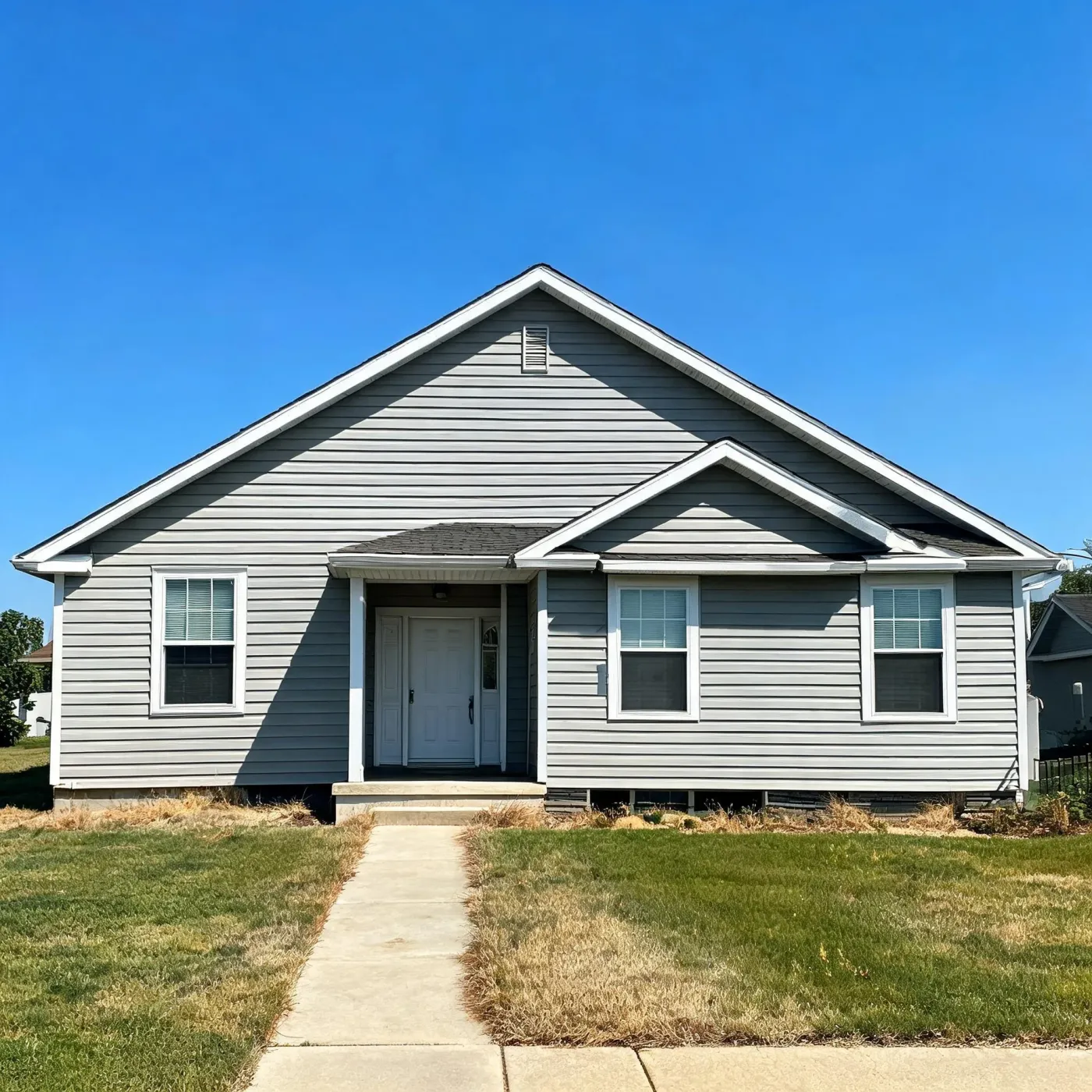
Single-story gray horizontal-siding house with white trim, gabled roof, white front door, and two windows, fronted by a concrete walkway through a patchy lawn under a clear blue sky.

The dew point in Leavenworth County averages 65°F through June, July and August, that's the number behind why the air outside feels thick even in the shade. Your AC has to wring that moisture out before the house feels dry and cool, and at 65 there's a lot to wring out. That's extra work on top of just dropping the temperature. On a day like that, a system that's low on refrigerant or sized too small for the house will run long stretches and still leave the air feeling damp, not crisp, even once the thermostat hits its mark. Source: NOAA climate normals for Leavenworth County.

NASA POWER T2MDEW

An outdoor air conditioning condenser unit on a concrete pad beside a house with horizontal lap siding, with a shrub and mulch bed to the left and conduit and a small electrical box on the wall to the right.
Before you get your air conditioner repair
A gray outdoor air conditioner condenser unit sits on a concrete pad beside a house with horizontal lap siding, with conduit and an electrical disconnect box on the wall, dark mulch and a shrub to the left, and a concrete walkway in the foreground.
After you get your air conditioner repair
  1. A contractor checks refrigerant pressure against what the system calls for.

  2. Low pressure points to a leak somewhere in the line set or coil.

  3. The capacitor gets tested, since a weak one makes the compressor labor.

  4. Airflow across the coil gets checked for dirt or a failing blower.

A closed laptop and a ceramic mug on a wooden table in front of a kitchen with green cabinets, marble counter, black pot, cutting board, wooden bowl, and a white vase with greenery.

An AC that can't hold the house at 78 has a reason behind it

Nothing about a hot afternoon in Leavenworth County fixes itself. A unit low on refrigerant stays low until someone finds the leak. A weak capacitor doesn't recover on its own. Whatever is behind the running and not cooling, it's a specific problem with a specific fix, and a contractor who works on these systems knows where to look first.

Finding that contractor is usually the slow part. Searching around, calling a few companies, explaining the upstairs rooms and the 78 that won't budge to each one, then sitting with quotes trying to compare them. Submitting here skips that. One licensed contractor local to Leavenworth County gets your situation, and you're not fielding calls from three different companies trying to win the job.

A shallow dark wooden bowl and a stack of books rest on a wooden table in front of a beige sofa with linen and green cushions, with a tall ceramic vase of thin branches beside a window in the background.
A gray outdoor air conditioning condenser unit on a concrete pad beside a house with horizontal vinyl siding, with a wall-mounted disconnect box and conduit, mulch bed, shrubs, and a concrete walkway nearby.

No phone calls to make

Reach a local pro

A licensed pro who works in Leavenworth County gets your request.

No fee to send it, and nothing to sign.