Running clean
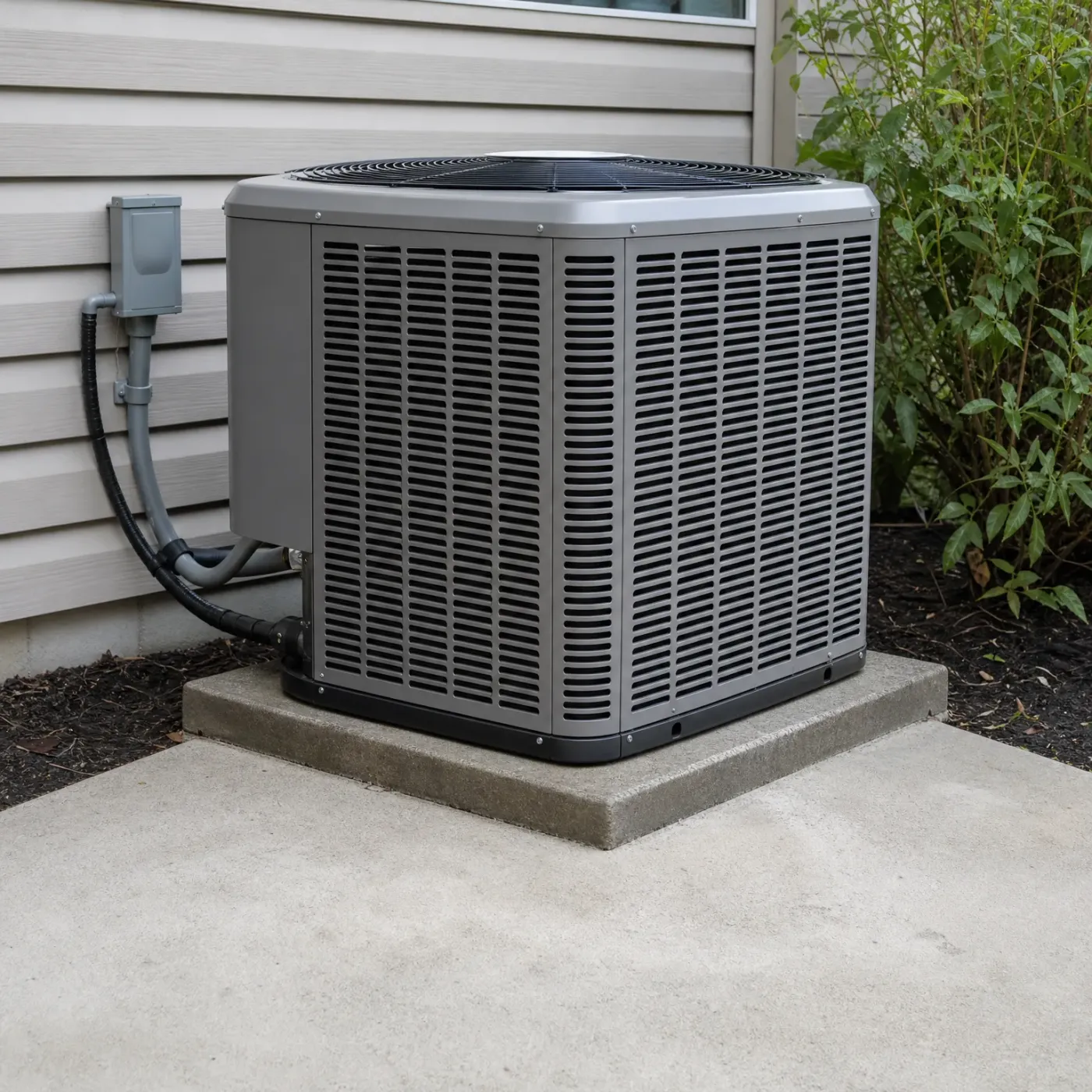
A condenser like this, clear of debris and sitting next to a trimmed shrub, can still move enough heat to cool your house. Air passes through the coil, the fan pulls it out the top, and the system does its job without a fight.
Warm air from your vents in July is not something to live with while you shop around. In Topeka, a system blowing warm usually points to one of a short list of problems, and a licensed local contractor who works on air conditioners all summer has seen most of them before. Send the form and the search ends there. Instead of calling around Shawnee County yourself, you get matched to one contractor, not a handful of companies competing for your callback. That means one call to take, not five to sort through while your house sits at eighty-something degrees. Topeka summers run long and muggy, and a system that quits in the middle of one does not get better on its own. Getting matched with someone who knows this equipment and this area takes the search off your plate.
Your AC is running, the vents are open, and all that's coming out is warm air. In Topeka's summer heat that's not something you can wait out, and it usually doesn't mean the whole system is shot. It points to one of a few specific problems, most of which a contractor can diagnose fast once they're standing in front of the unit.
When your AC blows warm, the most common cause is a refrigerant leak, which leaves the system without enough refrigerant to pull heat out of the air. Next most common is a dirty outdoor coil that can't release heat properly, especially after a summer of cottonwood seed and cut grass blowing into the unit. Less often, the compressor itself has failed, and that's the one that can't be patched. With Topeka summers running hot and humid from May through September, any of these show up fast because the system runs long hours with little rest. A contractor can check the refrigerant charge, look at the coil, and listen to the compressor to find out which one you're dealing with.

A condenser like this, clear of debris and sitting next to a trimmed shrub, can still move enough heat to cool your house. Air passes through the coil, the fan pulls it out the top, and the system does its job without a fight.

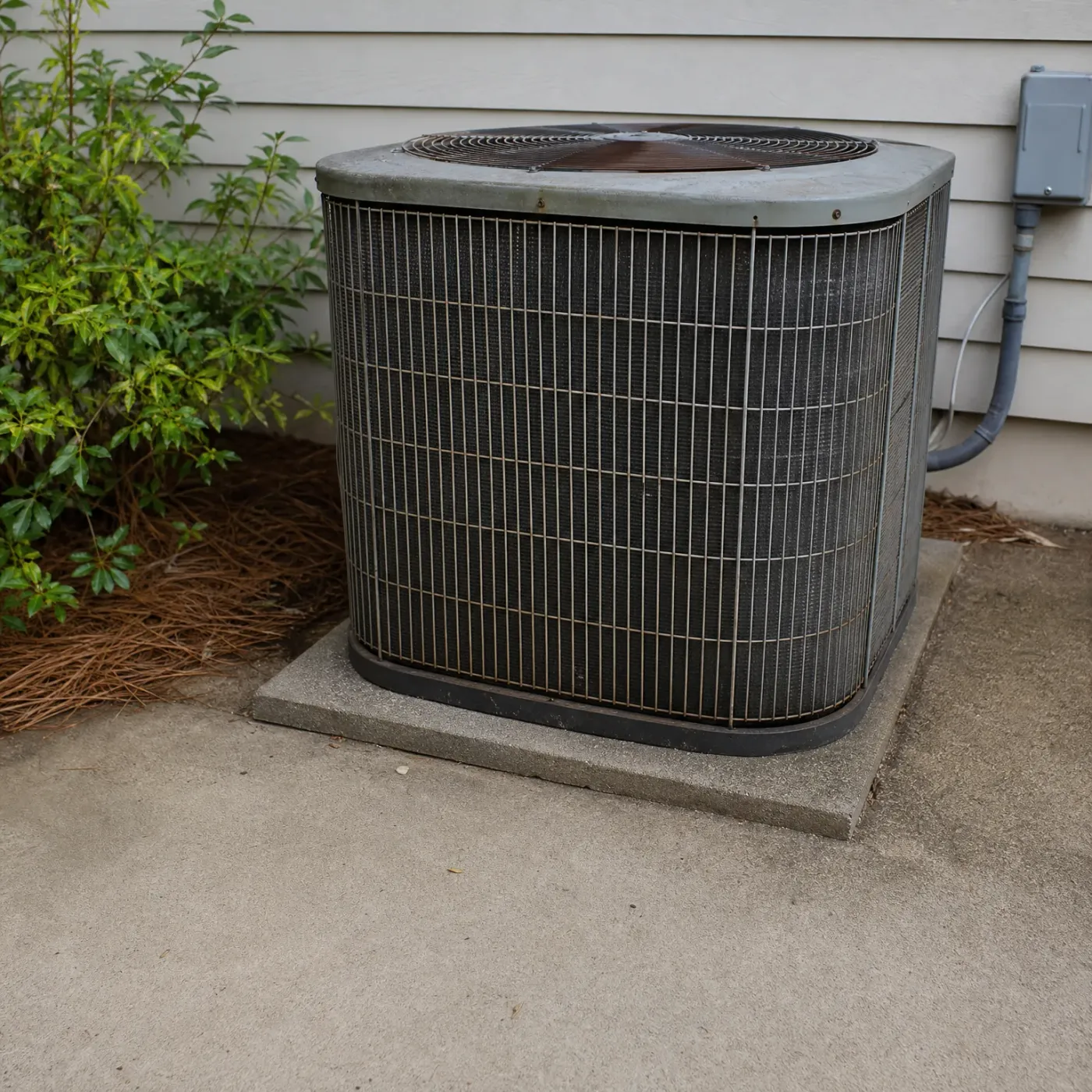
That cabinet is caked with dust and grime, and the mesh around it is doing the same thing to the airflow. When a coil can't shed heat because the outside is covered in buildup, the refrigerant inside stays warmer than it should, and the air at your vents loses its chill.




A licensed pro who repairs air conditioners in Shawnee County gets your request.
Sending the form costs nothing.
Start with the thermostat. If it's switched to "on," the blower never stops, so you feel it pushing air that hasn't had time to cool between cycles. That's different from a system that's actually failing. Next comes airflow. Your filter sits between the return duct and the coil, and when it's clogged, not enough air moves across that coil to pick up heat. The coil gets too cold for the air passing it, moisture on the coil freezes, and ice builds up along the fins. Once that happens, the system isn't cooling anymore, it's just running a fan past a block of ice, and that can go on for hours before anyone notices. Outside, the condenser has its own fan motor, and its job is to pull outdoor air across the coil so the heat your house gave up can actually leave the refrigerant. If that motor dies, the coil stays hot, the refrigerant going back inside stays hot, and your vents put out warm air even though the compressor is running fine. A failing capacitor causes a quieter version of the same problem: the compressor tries to start, can't get enough of a jolt to turn over, and just hums while the blower keeps moving untreated air. And if refrigerant is low from a leak somewhere in the coil or lines, the system keeps running on schedule but can't move enough heat out of the house to matter.


Summer air in Shawnee County sits at a dew point around 65°F, according to NOAA climate records, and that's the point where air starts to feel heavy and wet instead of just warm. Your air conditioner is built to pull that moisture out along with the heat, and doing both at once is harder on the system than cooling dry air. When something is already wrong, a coil low on refrigerant or starved for airflow, that thick air gives it even less of a chance to catch up. You'll notice it first as warm air at the vents on the muggiest afternoons, even while the system keeps running.
NASA POWER T2MDEW
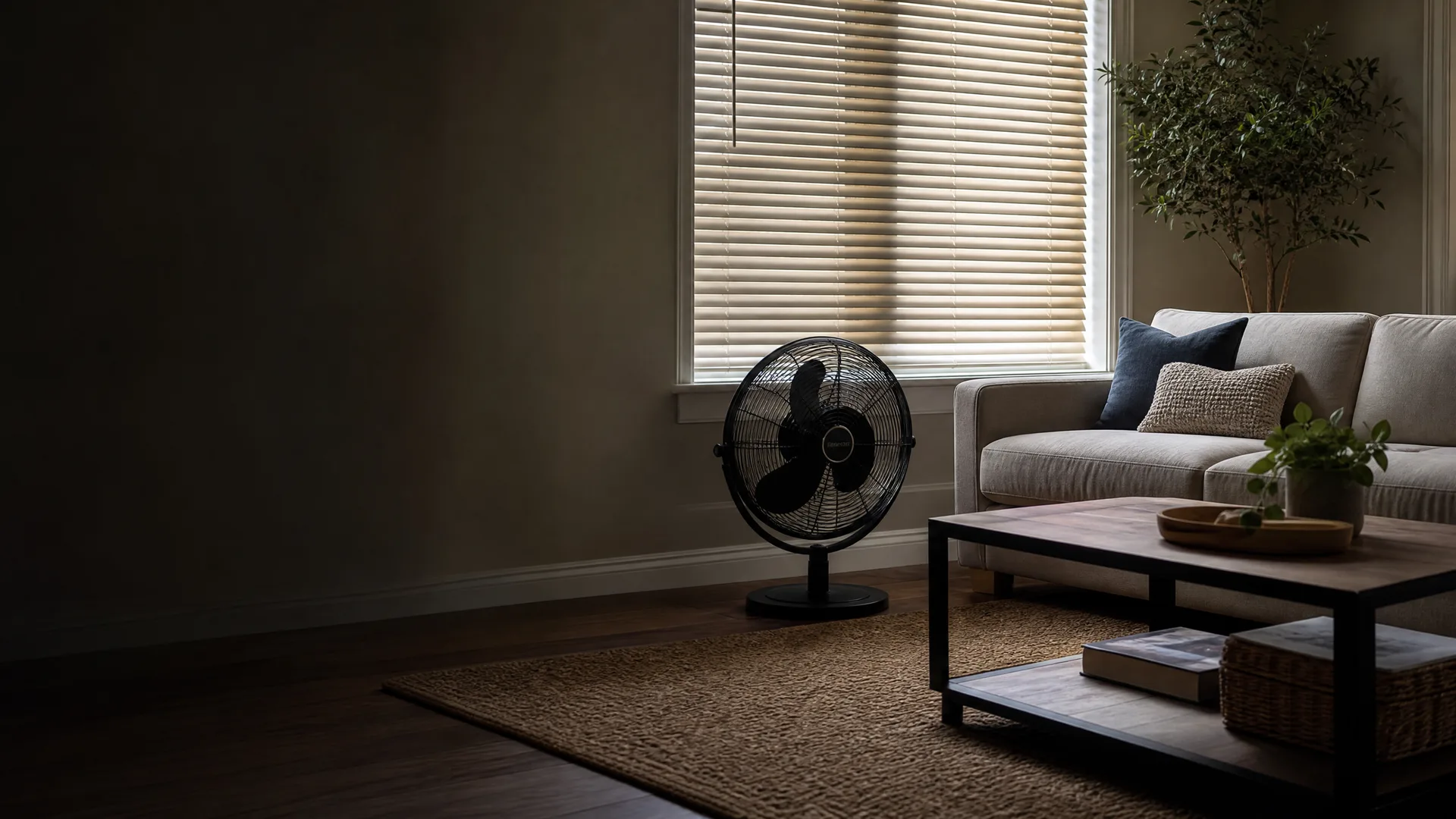
By three in the afternoon the blinds are drawn against the sun and the living room still feels close. A floor fan sits next to the couch, turning back and forth, stirring warm air around instead of cutting it. The vent in the ceiling is open all the way. You can hear the air conditioner running out back. Put your hand up to the vent and the air coming out is barely cooler than the room. Outside, Shawnee County is deep into one of those July afternoons where the air itself feels thick, and the house isn't catching up. The fan just moves the same warm air from one side of the room to the other.
Five months is most of the year your air conditioner has to actually work, so a unit that quits cooling in July has a long stretch of hot days still ahead of it. That's enough time for a small problem to turn into a bigger one if it sits.
NOAA nClimDiv 1991-2020
Thermostat calls for cooling and sends power to the contactor
Contactor pulls in and starts the compressor and condenser fan
Refrigerant compresses and flows out to the condenser coil
Refrigerant releases heat outside and turns back to liquid
Warm air at the vents in Topeka almost always traces back to one of a few things: a dirty filter, a dirty condenser coil, low refrigerant, a bad capacitor, or a thermostat set to run the fan when it shouldn't. None of those mean the system is done for. What they mean is the heat isn't getting pulled out of the air and carried outside the way it's supposed to, and a part or a setting somewhere in that chain needs attention. Five months of Kansas summer is a long time to run on a system that's already struggling, and the longer it sits, the more chance a small problem has to turn into a bigger one. A licensed local contractor can look at the system, find which of these it is, and get it actually cooling again. You don't have to figure out which part is at fault before you call. You just have to get the right person looking at it.


Done looking for an air conditioner pro
The pro who gets in touch is licensed in Kansas and works in Shawnee County.